
Reviewed · WALKING TOURS
Palma de Mallorca Must-See Attractions Walking Tour With A Guide
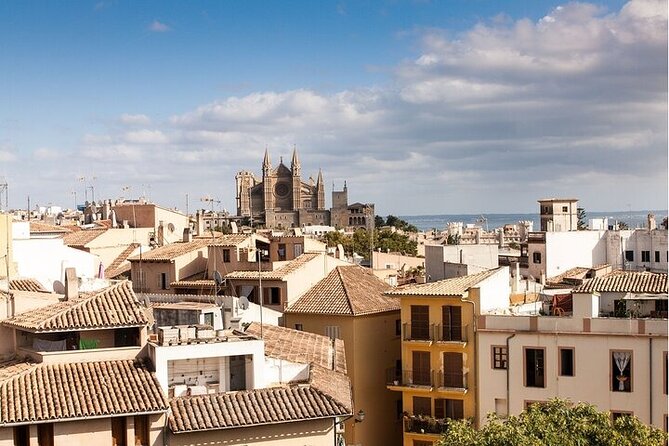
Palma makes more sense when you walk it. In about 2 hours, you get a guided loop through the Old Town highlights, with lots of ticket-free exterior viewing and a guide who can shape the pace to what you want most. It is a great way to connect the dots fast, especially if this is your first day in Palma or you only have a small window of time.
One thing to keep your expectations realistic: this is a city walking tour, not a monument interior crawl. If you want to go inside churches, convent spaces, or historic rooms, you will likely need to book entry yourself, or let the team help you arrange tickets. Also, shoes matter, because cobblestones and quick turns are part of the charm.
In This Review
- Key highlights you will feel on this walk
- Why Palma’s Old Town works best on foot in 2 hours
- Starting at Passeig des Born, and how the pacing keeps it fun
- Carrer de Sant Agustí and Plaça de Cort: the Old Town warm-up
- Santa Clara convent stops: calm streets, everyday faith
- Baños Árabes: Moorish influence you can actually picture
- La Lonja area and Guillem Sagrera: architecture trivia you will remember
- Plaça de Santa Eulàlia and Reial Covent de Sant Francesc: Gothic power without the overwhelm
- Ca’n Joan de s’Aigo: a café stop that fits the pace
- Cala Mayor beach time: your reset button
- Palau de l’Almudaina and Parc de la Mar: royal buildings and seaside calm
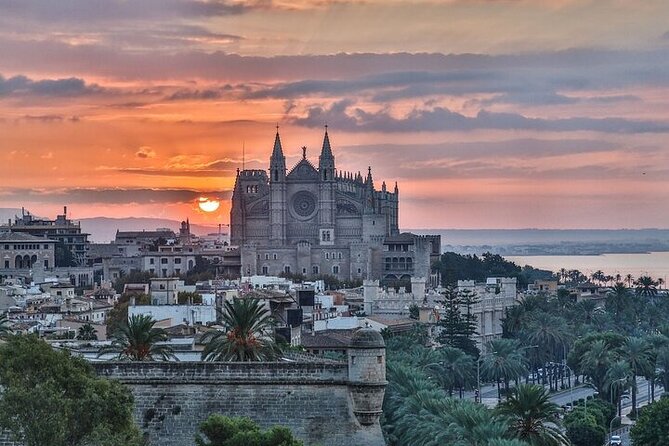
- Placa de la Seu: finishing near the cathedral square
- Price and value: what you pay for, and what to budget extra
- What you will likely love, and the one trade-off to respect
- Should you book this Palma walking tour?
- FAQ
- How long is the Palma walking tour?
- What is the price per person?
- Is this tour private or shared?
- What languages do the guides speak?
- Are monument or museum entries included?
- Does the tour include food or drinks?
- Where does the tour start and end?
- What is the cancellation policy?
- Is public transportation nearby?
Key highlights you will feel on this walk
- A tight 2-hour Old Town loop that helps you understand Palma’s layout without spending hours commuting between sights
- Gothic and Moorish landmarks in one route, from Santa Clara convent atmosphere to the Baños Árabes Moorish baths
- Guide-led tailoring in plain language, with examples from guides like Romi, Christina, and Mimi in past tours
- A real café stop at Ca’n Joan de s’Aigo, where you can grab traditional sweets even though food is not included
- A short, scenic beach stretch at Cala Mayor, good for a reset after the historic core
- Easy ending at Plaça de la Seu, so you can roll right into your next plan near the cathedral square
More ground covered on foot
- Palma de Mallorca: Foodie Walking Tour of the Old Town
★ 4.6 · 372 reviews - Private walking tour in Palma de Mallorca with local guides.
★ 5.0 · 182 reviews - Palma de Mallorca: Walking Tour, Cathedral & Local Tasting
★ 4.9 · 115 reviews
Why Palma’s Old Town works best on foot in 2 hours
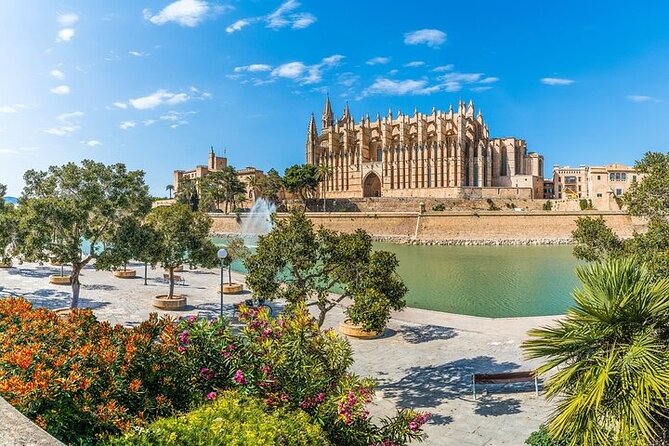
Palma’s Old Town is the kind of place where a map alone will not save you. Streets curve, squares open up suddenly, and the city layers (medieval, Moorish influence, later religious power) show up in the buildings more than in the signage. A guided walk like this is the fastest way to build that mental picture.
I like that the tour is short enough to feel doable, even if you are visiting on a busy day. You can treat it like an orientation session, then later decide what you want to explore more deeply on your own. And because it is a walking format, you get the human scale of Palma, not just “look at the building, move on.”
Starting at Passeig des Born, and how the pacing keeps it fun
You meet at Passeig des Born, 4 in Palma, and the walk loops back to the same general area at the end. That matters because it reduces the stress of figuring out where you are after the last stop. The route is structured with quick bursts at each location, so you spend time looking, listening, and getting your bearings.
This is also a good length for people who do not want a half-day of museum lines and complicated logistics. If you are coming from a cruise day, a compact schedule helps you avoid the classic problem of spending too long traveling just to stand in front of one sight.
One small practical note: this is a cobblestone city. Bring comfortable shoes, because “10 minutes here” can still feel like a workout when the street surface is uneven.
Carrer de Sant Agustí and Plaça de Cort: the Old Town warm-up
The tour starts on Carrer de Sant Agustí, where the Old Town character hits right away. Think narrow lanes, older-looking facades, and that slow, winding rhythm that makes you understand why people get lost here, on purpose. It is a nice way to start, because you are not yet jumping into the biggest monuments, you are learning how Palma “moves.”
Then you step into Plaça de Cort, which acts like the emotional center of the historic core. The square is surrounded by elegant architecture, and there is an iconic olive tree that connects the space to local identity and symbolism. I like this kind of stop because it teaches you what to notice next, not just what to photograph.
Santa Clara convent stops: calm streets, everyday faith
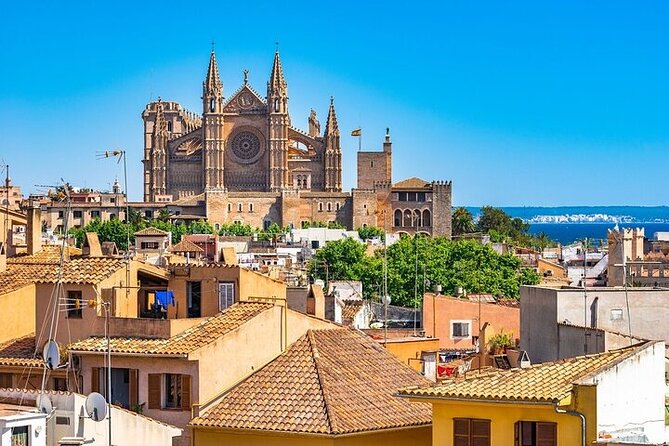
Santa Clara is one of the tour’s repeating themes, and it works well because you get two angles on the same story. Early on, you pause at the Convent of Santa Clara and take in the quieter atmosphere you only notice once you step away from the busiest streets. The guide frames it as more than a pretty setting, it is part of how Palma’s religious life shaped the city over time.
Later, the walk returns to Santa Clara again, this time tied to how the convent life continues. Even if you do not go inside, the context helps you read what you see: quiet walls, restrained exterior details, and the sense that the site is still functional, not just decorative. If you are the type who likes cultural “how people lived” stories, this part will stick with you.
The only caution here is expectation management. Since the tour is described as not being inside monuments, you should plan on exterior views and guide-led explanations rather than a full interior experience.
Other ways to spend a day around Mallorca
Baños Árabes: Moorish influence you can actually picture

A standout stop is the Baños Árabes, the Arab Baths. The guide helps you connect the building style to Moorish influence, including the fact that the baths date back to the 10th century. That is old, and what makes it interesting is that it is not some far-off abstract reference. You can stand near the spaces and imagine daily routines built around bathing and water.
This stop is ideal if you enjoy architecture that shows real historical overlap. Palma did not evolve in isolation, and the Moorish footprint gives you a different lens than the purely Gothic churches. It also breaks up the religious sites with something more architectural and “daily life” oriented.
La Lonja area and Guillem Sagrera: architecture trivia you will remember
Next you get to the area connected to La Lonja, including La Bodeguita del Medio de La Lonja. You learn about a historic building designed by artist Guillem Sagrera, and that kind of detail is why guided walks outperform self-guided ones. Sagrera’s name becomes a reference point, so you start noticing similar design choices and craftsmanship instead of just admiring facades in a vacuum.
I also like this stop because it is a “pause and look” moment. You can step back from the crowd energy and actually see why the building is built the way it is.
Plaça de Santa Eulàlia and Reial Covent de Sant Francesc: Gothic power without the overwhelm
From Plaça de Santa Eulàlia, you get a Gothic church experience at street level. The guide points out the stunning Gothic facade and what to look for if you go inside on a separate visit. Even without entry included, the explanation makes the facade feel less like random stonework and more like a specific language of design.
Then you continue to Reial Covent de Sant Francesc, connected with the Basilica de Sant Francesc. Again, you are not doing a full interior tour here, but the walk helps you understand the scale and importance of the site, plus how it connects to religious relics and artifacts. If you want to later add an interior visit, this is a strong primer.
If you are someone who gets overwhelmed by too many similar-looking churches in a short time, pace helps here. The tour breaks up Gothic architecture with different themes, including baths and a real café stop.
Ca’n Joan de s’Aigo: a café stop that fits the pace
One of the best practical moments is the stop at Ca’n Joan de s’Aigo, a historic café known for traditional Mallorcan sweets and pastries. Food is not included, but the tour still gives you the value of a guided context and a timely break. You are not wandering around searching for a place to eat while the day slips away.
In past tours, guides have also made this moment more useful by giving simple directions and local advice. For example, Mimi was praised for helping people connect the walk to what to do next, including how to get back if you arrive by cruise and suggestions for local transport.
So here is my advice: if you stop for pastries, also ask your guide what they would do if they had the rest of the day. You will often get a more realistic plan than what you would cobble together from apps.
Cala Mayor beach time: your reset button
After the Old Town sections, the walk reaches Playa de Cala Mayor. This is a short stroll along the golden sand with Mediterranean views, and it is a smart rhythm break. Even with only around 10 minutes, you get fresh air and a chance to shake off cobblestone fatigue.
This beach stop is not meant to turn into a long day at the water. It is more like a check-in with the sea, so you can decide later if you want a longer beach outing on your own.
Palau de l’Almudaina and Parc de la Mar: royal buildings and seaside calm
Next comes Palau de l’Almudaina, a medieval palace that once served as a royal residence. The guide explains its role and helps you visualize how monarchs used these halls and courtyards. Even when you are only seeing parts from outside, the framing makes it easier to appreciate why this area matters.
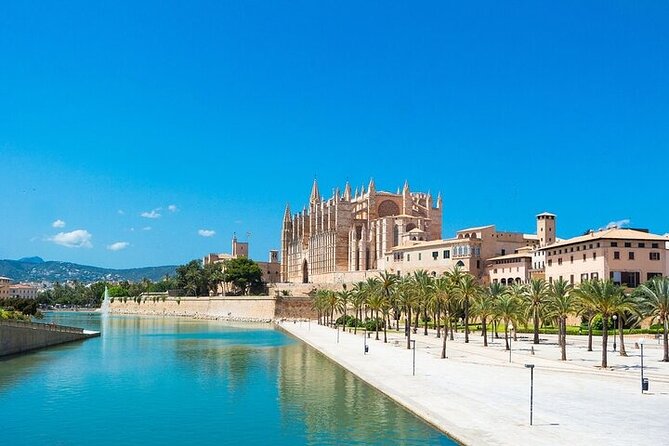
Then you move into Parc de la Mar, which sits between the sea and the city. This is where you trade stone and architecture for a calmer walk and panoramic views, including sights linked to the Cathedral of Santa Maria. I like this section because it helps you end the walk feeling lighter, not rushed.
Placa de la Seu: finishing near the cathedral square
The tour concludes at Plaça de la Seu, a lively square near the cathedral area. This ending is strategic, because it drops you into a place where you can continue without re-planning your entire route. If you want a drink, people-watching, or a final round of photos, this is an easy place to do it.
Because the tour ends back near the meeting point area, you are not stuck trying to find a complicated last bus stop while tired. Ask your guide for one or two specific directions before you leave, especially if you are starting from a port.
Price and value: what you pay for, and what to budget extra
The price is $37.71 per person, and for a guided 2-hour walk it is in a reasonable range if you care about interpretation, pacing, and “what to notice.” You are not just buying access to sites, you are buying a guide who can connect Moorish baths, Gothic churches, and local café culture into a coherent story.
Here is what your money is covering based on the tour setup:
- A guided walking tour (including private or small group options)
- Mobile ticket access
- In-person guide in English, Spanish, French, or Italian
- Help from the team to book tickets for visits you want inside
And here is what is not included:
- Entry to monuments and museums (this is a city tour, not an inside-monument program)
- Drinks and food (you can buy something at Ca’n Joan de s’Aigo if you want)
- Tips are optional
- Transportation costs during the tour
So the value equation looks good if you want a strong overview and a route you do not have to think about. If you are planning to go inside lots of major sites, add some extra budget for tickets. If you only want to look around outdoors and learn from the guide, this format is ideal.
One more practical signal: the tour is often booked about 44 days in advance. That suggests it is popular enough to plan ahead, especially in peak season or if you have a tight cruise schedule.
What you will likely love, and the one trade-off to respect
The highest praised aspect is the guides themselves. In past experiences, people highlighted friendliness, enthusiasm, and the ability to answer questions and tailor the walk. Guides like Romina (Romi), Christina, and Mimi were specifically mentioned for being welcoming and for making the walk feel personal, not canned.
The second big win is the mix of themes. You get Old Town streets and squares, religious sites, Moorish baths, royal palace atmosphere, and then an actual sea break at Cala Mayor. That balance keeps the walk from turning into one long “church after church” moment.
The main trade-off is also clear: this is not designed as an interior-focused tour. If you want to see inside every monument, you will need additional ticket planning. Also, each stop is brief, so if you are the type who likes to linger for an hour in one place, you might find the pacing a little fast.
Should you book this Palma walking tour?
Book it if you:
- Want a fast, organized overview of Palma’s main themes in a short window
- Enjoy architecture stories, from Moorish influence to Gothic churches
- Like guided directions for what to do next, especially if you are on a cruise
- Prefer mostly outdoor stops and you are happy to add interior visits separately
Consider skipping or pairing it with other plans if you:
- Want a deep, inside-only monument experience
- Need lots of time per stop for photos, sketching, or long contemplative visits
- Are looking for a full beach day, since Cala Mayor here is brief
If you are smart about expectations, this walk is a solid way to start Palma well, and it helps you spend the rest of your time making better choices.
FAQ
How long is the Palma walking tour?
The tour runs for about 2 hours.
What is the price per person?
The price is $37.71 per person.
Is this tour private or shared?
It is offered as a private tour/activity, and a small group option is also available.
What languages do the guides speak?
Guides are available in English, Spanish, French, and Italian.
Are monument or museum entries included?
No. It is described as a city tour, not a tour inside the monuments, and entry to monuments and museums is not included. The team can help book tickets if you want to visit specific places.
Does the tour include food or drinks?
Food and drinks are not included. There is a stop at Ca’n Joan de s’Aigo where you can buy traditional pastries if you want.
Where does the tour start and end?
It starts at Passeig des Born, 4, Centre, 07012 Palma, Illes Balears, Spain. It ends back at the meeting point.
What is the cancellation policy?
You can cancel for a full refund if you cancel up to 24 hours in advance. Cancellation less than 24 hours before the start time is not refunded.
Is public transportation nearby?
Yes, the meeting point is near public transportation.
Fresh on the Island
- Mallorca: Painting like Miró★ 5.0 · 14 reviews
- Private 2 Hour Luxury Sunset Sail Port de Sóller Mallorca★ 5.0 · 14 reviews
- Valdemossa Half Day Tour★ 3.5 · 14 reviews
- Round Trip Fast Ferry from Alcudia Mallorca to Menorca★ 5.0 · 14 reviews
- Alcudia: Llevant Peninsula Nature Reserve Private Boat Tour★ 5.0 · 14 reviews
- Mallorca: Morning boat tour around Palma Bay with snorkelling 2h★ 4.6 · 14 reviews
- Soller: Private boat tour with skipper★ 5.0 · 14 reviews
- Mallorca: coasteering South★ 4.5 · 14 reviews
Walking Tours, compared.
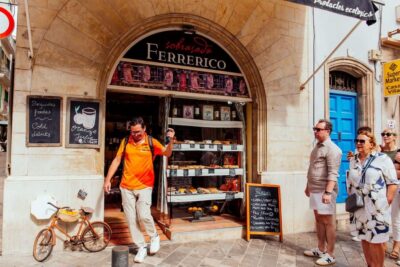
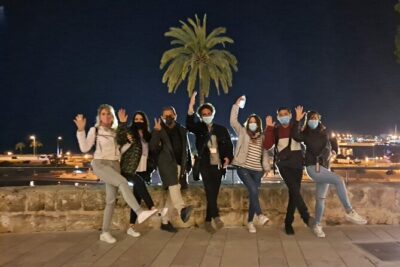
Private walking tour in Palma de Mallorca with local guides.
Read our review →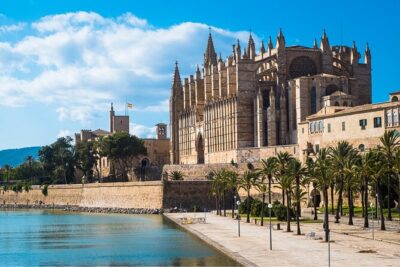

Food Tasting Walking Tour in Palma with a Local
Read our review →
2-Hour Private Walking Tour Through Palma’s Jewish Quarter
Read our review →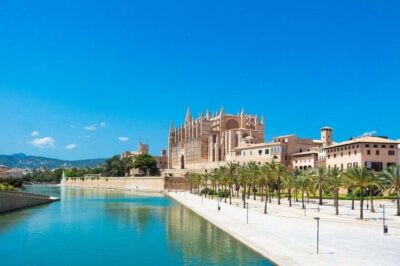

Browse the lists this tour appears in