
Reviewed · WALKING TOURS
Palma’s Alternative History: A Self-Guided Audio Walk
Palma tells its past, one street at a time. This self-guided audio walk uses Sandra’s narration to connect key sights in Palma into an easy 60 to 90 minute history loop, and I like that you can pause and restart whenever the pace of your day demands it. I also like the offline VoiceMap setup, so you are not hunting for a signal mid-walk. One real consideration: the VoiceMap experience depends on your phone, and a small number of people have run into app trouble or faster battery drain.
You start at Parc de la Mar, a sea-built square facing the Cathedral and Almudaina, which is a smart way to get your bearings fast. Then the route threads through historic churches, former royal and maritime spaces, and popular squares like Plaça Major. The story focus is what makes the hour feel longer in a good way, even if you do not want a full walking tour with a group.
In This Review
- Key things to know before you go
- Price and timing, what you get for $9.99
- Starting at Parc de la Mar, the sea-built square that sets the tone
- The Art Nouveau stop, early 1900s architecture with a story
- Can Marcel lounge bar, a practical break inside historic walls
- Santa Eulalia Church, where the old crown story predates the Cathedral
- Sa Riera torrent, the city split line you can still imagine
- Plaça Major for Saint Sebastian, religion, civic pride, and local calendar
- Cathedral of Palma, the Seu also called the Cathedral of Light
- Almudaina Palace, Arabic roots and today’s official residence
- A free Gothic stop from 1428, the former maritime stock exchange
- Finishing near Palma’s civic heart, Plaça de Cort and Plaça Major connections
- VoiceMap app reality check, offline helps but GPS can cost battery
- Who this Palma audio walk is best for
- Practical planning tips so the hour feels easy
- Should you book Palma’s Alternative History audio walk?
Key things to know before you go
- Start at Parc de la Mar, right by the sea-built square facing the Seu and Almudaina
- Sandra’s alternative-history narration ties Palma’s layers together, from medieval to modern
- Offline maps and audio help you keep going even with spotty cell service
- Flexible timing means you can pause for photos, a drink, or a detour
- Several free stops along the way, including Santa Eulalia Church and the maritime stock exchange
- VoiceMap depends on your phone and GPS, so battery use is worth planning for
Other ways to spend a day around Mallorca
- Palma: Caves of Genova Ticket & Digital Audio Guide
★ 3.9 · 820 reviews - Palma de Mallorca: Self-Guided Audio Tour
★ 4.1 · 12 reviews - Self-Guided Audio Tour – The Legends of Palma
★ 3.5 · 8 reviews
Price and timing, what you get for $9.99
At $9.99 per person, this audio walk is priced like an activity, not a big-ticket excursion. For that cost, you get lifetime access to the English version, plus the VoiceMap app experience with offline audio, maps, and geodata. That matters if you like to roam slowly, because you can repeat sections later without buying another ticket.
The walking time is about 1 hour to 1 hour 30 minutes, and the route stays in Palma’s historic center. That makes it realistic on a first trip when you want context without spending half a day in a guided format. It is also built around major landmarks, so you are not stuck searching for the one interesting corner that a random walking tour might miss.
One more practical note: the tour is private in the sense that only your group participates. In practice, with a self-guided audio walk, that mainly means you can move at your own speed without blending into a larger crowd.
Starting at Parc de la Mar, the sea-built square that sets the tone
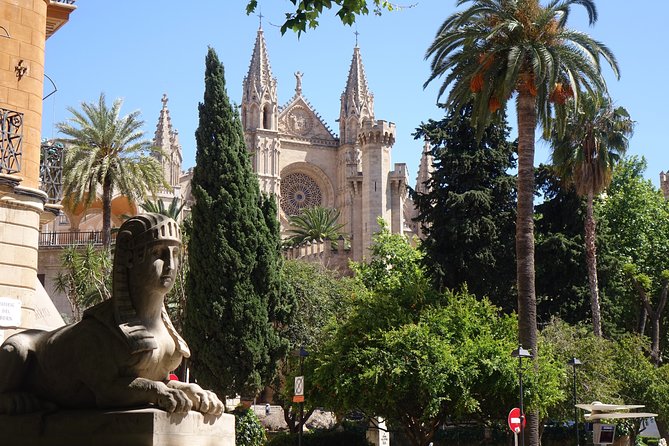
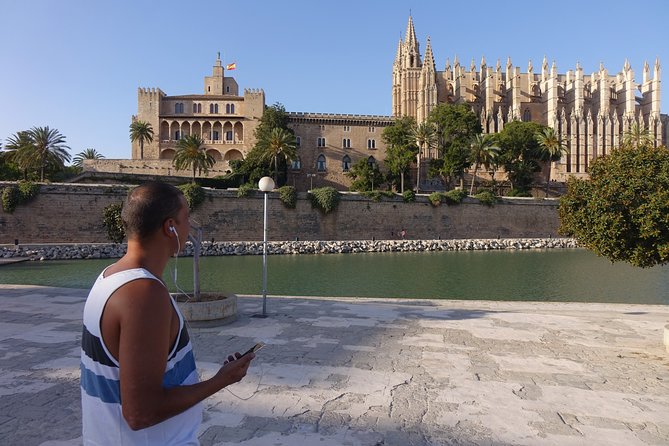
Your walk begins at Parc de la Mar in Palma. This is not a random plaza start, because it is positioned to frame the story of the city. You are facing both the Cathedral of Palma and the Almudaina Palace, and you are also looking at a square that was built over the sea during the tourism boom era.
That opening is clever because it gives you two things quickly:
- A sense of geography, where major sites sit relative to each other.
- A theme, Palma as a city that keeps rebuilding, even while it preserves older cores.
If you arrive a bit early, take 5 minutes to stand and orient yourself. Then start the narration and let it “draw lines” between what you see and what you are about to learn.
The Art Nouveau stop, early 1900s architecture with a story
After the sea-front start, the route includes a splendorous Art Nouveau monument from the early 1900s. You might not expect a modern-looking style in an alternative-history walk, but that contrast is useful. It nudges you to see Palma not just as old stone, but as a city that kept changing taste and ambition.
For this stop, think of it as a gear shift. The narration helps you connect the city’s older layers to the period when Palma was promoting itself to visitors and investors. If you are into architecture, linger just long enough to notice details, then move on before your attention fades.
Can Marcel lounge bar, a practical break inside historic walls
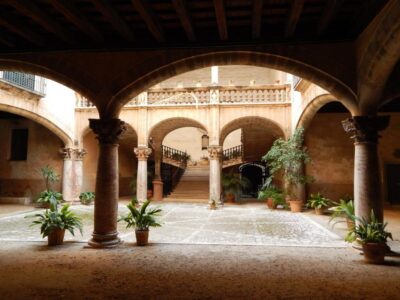
Next comes a classic Palma rhythm: old house, new life. This stop is a 17th-century noble Majorcan house (formerly called Can Marcel), now hosting a rustic lounge bar. Even if you do not stop for a drink, it is a smart place to understand how buildings survive by adapting.
I like that this is not just a photo stop. It signals where your body can rest during the walk. If you want something to make the timing feel easier, this is where you can do it, then rejoin the audio without guilt.
Possible drawback: it is easy to linger in bars. If you have a tight schedule, set a rough limit for yourself so you still reach the Cathedral area and the end squares at a comfortable pace.
Boats, caves, and mountain roads — Mallorca rewards a rental car or a good captain.
Santa Eulalia Church, where the old crown story predates the Cathedral
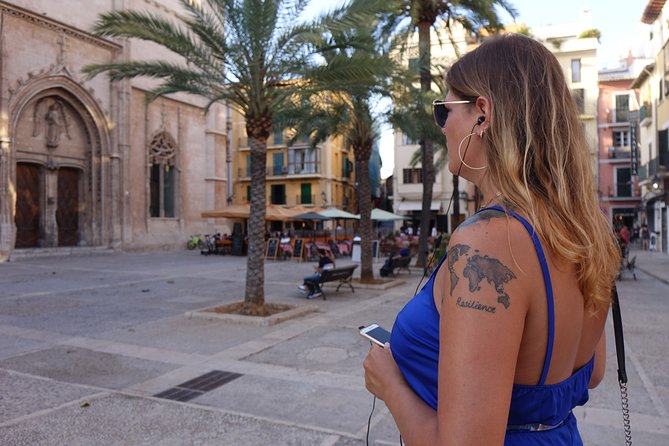
One of the most meaningful stops is Santa Eulalia Church, described as one of the oldest churches of Majorca, built in the 13th century. What makes it stand out in the narration is the timeline. The route notes that the first kings of Majorca were crowned here before the Cathedral was completed in 1601.
That single detail changes how you see the bigger landmark. Instead of treating the Cathedral as the start of royal Palma, you get a sense that important power moments happened earlier, in a space that still feels alive.
Inside, it is described as richly decorated in Baroque style, and the stop is free to visit. If you want a fast version, look for the main altarpiece and overall decoration pattern, then step back out. If you want a slower version, pause here longer than you think, because the interior is where the story becomes visual.
Sa Riera torrent, the city split line you can still imagine
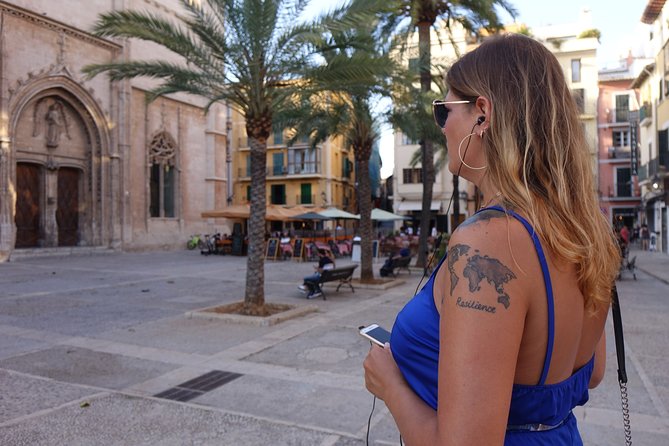
Another stop focuses on a historical street-place connection: in the past, the torrent of Sa Riera flowed through this street, dividing the city into two parts, and knights’ tournaments were organized along the waterway.
Even if you cannot picture the torrent immediately, the narration helps you build a mental map. This kind of story is why I like audio walks. You are not just looking at buildings, you are learning the shape of old daily life.
Practical tip: keep an eye on where your route crosses different street widths and alignments. Those small cues can help you understand how the old water channel might have influenced movement and defense.
Plaça Major for Saint Sebastian, religion, civic pride, and local calendar
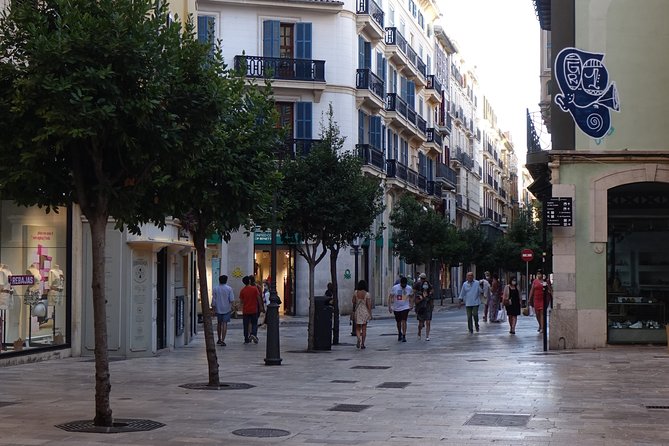
From medieval streets, the walk reaches a central square tied to the local calendar: a square built in the mid-19th century that hosts the feast day of Saint Sebastian on January 19, celebrating Palma’s patron saint.
This stop matters even if you visit outside festival season. It gives you context for why Palma has certain processions, rituals, and public pride in the first place. When you later see church posters, street decorations, or small statues, this narration helps those details make sense.
The walk also explicitly includes Plaça Major, so if you want that familiar central landmark on your map, this is one of the places you will recognize.
Cathedral of Palma, the Seu also called the Cathedral of Light
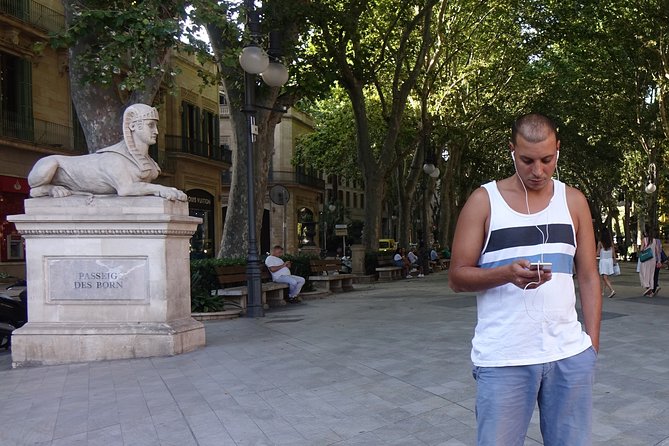
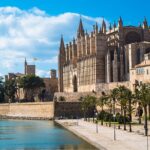
Now for the “big one”: the Cathedral of Palma, also known as the Seu, described as the Cathedral of Light. Construction started in 1230 and finished in 1601, which is such a long span that you can almost feel multiple eras stacked inside.
The route frames it as the crown jewel and a source of pride for Majorcans. That is exactly how it feels when you stand close: you sense that people here care about the building, not just as a tourist sight, but as part of identity.
How to make this stop work with your time:
- If you only have 5 minutes, focus on the outside lines and the main facade view.
- If you have 20 to 30 minutes, you can afford to slow down and let the light do its job, since the nickname points to that experience.
The only caution is that the narration will move on. So decide early whether you want to follow it immediately or linger and then catch up when you are ready.
Almudaina Palace, Arabic roots and today’s official residence
Next is the Almudaina Palace, described as an Arabic king palace built in the 10th century, noted as the oldest monument of Palma. It is also described as a current official king residence, where King Philip VI receives official visitors such as presidents from other countries. The palace is also presented as a museum and military building.
That combination is striking. This is not just a ruin. It is a living site with layers: Arabic foundations, royal function, and museum or military uses.
For your own visit strategy, treat Almudaina as a context stop. Even if you do not go inside, the narration gives you the reason behind the building’s importance and why it sits where it does in the skyline of Palma.
A free Gothic stop from 1428, the former maritime stock exchange
Another highlight in the route is a Gothic-style building built in 1428, described as the former maritime stock exchange. The route notes it is open to the public and that admission is free.
If you like maritime stories, this is the kind of place that turns a city into a working world. Palma’s location mattered for trade, travel, and power. A stock exchange building is a reminder that history is not only wars and crowns, it is also commerce.
Practical advice: if you want to keep the full loop around 90 minutes, step into this stop briefly and then continue. The narration is timed for movement, but you control how long you linger.
Finishing near Palma’s civic heart, Plaça de Cort and Plaça Major connections
The walk’s end point is Plaça de Cort, described as the mile zero of Palma. You finish roughly an hour later near Palma’s town hall area. This ending works because it puts you back in the civic center, where lots of people naturally wander after tours.
Before that ending, the route weaves through squares with distinct functions: the sea-front start, the central market-and-cardinal-square energy around Plaça Major, and then the final civic focus. That design helps you get a mental “map in layers” rather than just a checklist of monuments.
VoiceMap app reality check, offline helps but GPS can cost battery
The tour includes the VoiceMap app for Android and iOS, with offline access to audio, maps, and geodata. That is great in Palma’s older streets where signal can fluctuate. It also helps if you prefer to put your phone in low-power mode, because the content is available without streaming.
Still, the experience depends on your phone’s ability to handle geolocation prompts and play audio. Some folks report that the app can be buggy, forcing restarts and manual point marking. Even when it works smoothly, the setup can use more battery than you expect, especially if GPS stays active.
What I suggest you do before you start:
- Charge your phone enough for your full day, not just the walk.
- Bring a small power bank if you are also using photos and maps.
- If you have battery anxiety, close other heavy apps first.
Also watch for getting off track. If you miss a stop, you can end up spending energy searching rather than walking. A short pause to re-orient and then resume usually beats rushing.
Who this Palma audio walk is best for
This experience is ideal if you want:
- Main landmarks without a rigid group pace, especially on a first visit
- A clear timeline that turns disconnected buildings into a single story
- A walk you can repeat later thanks to lifetime access
- A route that includes free entry options so you can choose how much time to spend indoors
It is less ideal if:
- You strongly prefer fully guided, in-person explanations
- Your phone tends to struggle with apps that rely on GPS
- You hate any chance of technical interruptions, because audio walks can only be as smooth as the app
Practical planning tips so the hour feels easy
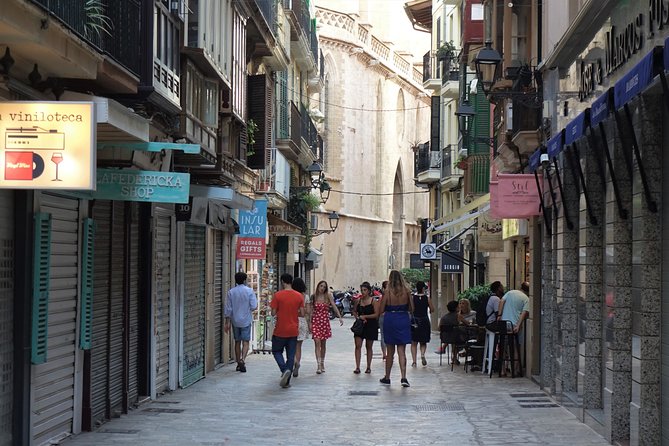
- Wear shoes you can stand in. The route crosses multiple historic streets and squares.
- Start around midday or afternoon if you want more ambient city life. The app works all day based on the posted hours, but the city feels different at different times.
- Build in time for Santa Eulalia and the free maritime stock exchange stop, since both are explicitly free and worth at least a quick look.
- When you reach the Cathedral area, decide how long you want to stay before you start. Once you linger, your narration timing might tempt you to rush, so choose your pace up front.
Should you book Palma’s Alternative History audio walk?
If you like history that feels human and specific, this is a solid pick. For $9.99, you get offline audio and maps, a route that hits major Palma anchors like Parc de la Mar, the Seu, Almudaina, and Plaça Major, and a narration voice associated with Sandra, a longtime resident. The free stops help stretch your value.
I would book it if you want a flexible first pass through the historic center, especially when you do not want to commit to a full guided tour. I would hesitate only if your phone is prone to app crashes or if you know you will have low battery and no way to recharge.
If you want Palma in an hour to ninety minutes, with context you can actually use while you walk, this one is worth putting on your day.
Walking Tours of the Island
Fresh on the Island
- History, Architecture and Legends of Palma de Mallorca★ 5.0 · 1 review
- Deluxe Excursion in Palma De Mallorca and Valldemossa★ 5.0 · 1 review
- Palma de Mallorca Private Boat.Adventure from the Sun to the Stars★ 5.0 · 1 review
- Half-day trip to the Drach Caves★ 5.0 · 1 review
- Coasteering northern area Mallorca (Alcudia)★ 4.0 · 1 review
- Mallorca: 4-Hour Retreat of Yoga, Meditation & Magic Vibes★ 5.0 · 1 review
- Mallorca: individually guided hiking tours, city, coast, almond blossom★ 5.0 · 1 review
- 8-Hour Formentor and Sineu Market with boat trip Tour in Mallorca★ 4.0 · 1 review
Walking Tours, compared.
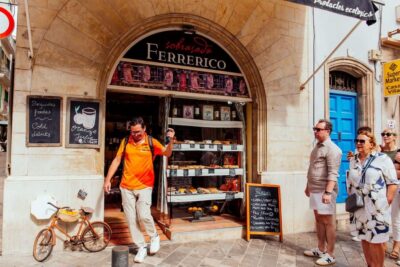
Private walking tour in Palma de Mallorca with local guides.
Read our review →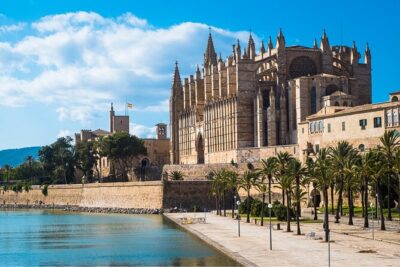

Food Tasting Walking Tour in Palma with a Local
Read our review →
2-Hour Private Walking Tour Through Palma’s Jewish Quarter
Read our review →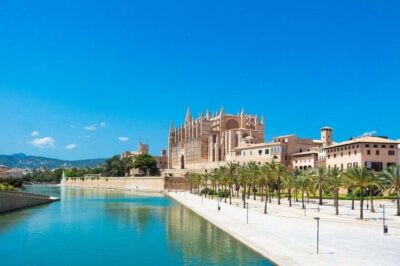

Browse the lists this tour appears in