
Reviewed · PALMA CATHEDRAL TOURS
Mallorca Old Town Walking Tour with Cathedral Skip The Line Tour
Palma Cathedral feels less like a stop and more like a plan. This 90-minute guided walk pairs Mallorca Cathedral skip-the-line entry with a smooth tour of Palma’s historic center, so you get bearings fast and still have time to roam after. I especially like that you move through the Old Town with context, not just photos.
Two things I really like: the guided stop inside La Seu (with admission included) and the way the walk ties together landmarks like the Almudaina Palace area and the civic core around Plaza de Cort. The cathedral is the headline, but the route also gives you a sense of how Palma’s city layout evolved.
One caution: the experience can feel logistically tricky if you struggle to find the meeting point, and the cathedral can get crowded enough that hearing is not always perfect, especially if your group is split across languages.
In This Review
- Key highlights and what they mean for your day
- Palma Cathedral and Old Town in 90 minutes
- Skip-the-line at La Seu: what you will actually see inside
- Estatua Es Foner, Jaume Mir, and a quick art detour
- S Hort del Rei, the Kings Gardens, and photo-friendly palace views
- Roman walls and Almudaina viewpoints that explain Palma’s layout
- Catedral de Mallorca again, then La Almudaina and the civic spine
- The Cort Olive Tree and Palma’s symbol of rootedness
- Modernism stop: Gaudi influence you can spot without a guidebook
- Sa Llotja as your practical lunch handoff
- Price and value at about $33.72 per person
- Logistics that can trip you up, and how to avoid it
- So, should you book this Palma Old Town and Cathedral tour?
- FAQ
- How long is the Mallorca Old Town Walking Tour with Cathedral skip-the-line?
- What is included in the ticket price?
- What cathedral time do I get on the tour?
- Is the tour in English?
- Where do I meet the guide?
- Does the tour end at the same place it starts?
- Are food and drinks included?
- What is the cancellation policy?
- What is the maximum group size?
Key highlights and what they mean for your day
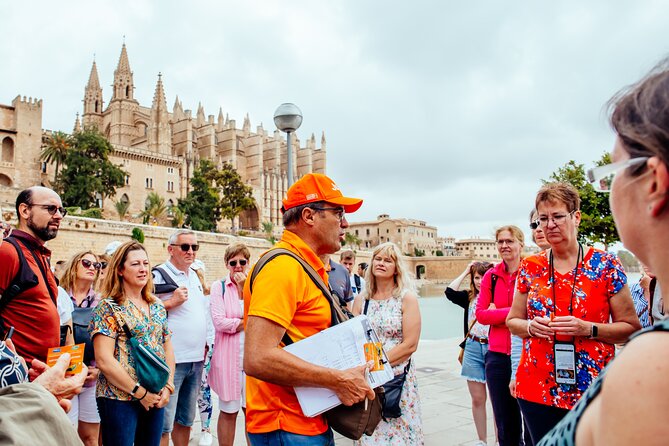
- Skip-the-line at Mallorca Cathedral: you spend time looking, not waiting.
- About 45 minutes inside the cathedral: enough time to see the stained glass and Gaudi-designed elements without feeling rushed.
- S Hort del Rei gardens under Almudaina Palace: classic green pauses with great photo angles.
- Old Roman wall section and Almudaina views: a quick geography lesson with payoff scenery.
- Civic Palma stops in Plaza de Cort: Ayuntamiento de Palma, the Rellotge d en Figuera clock, and the Olivera de Cort.
- Sa Llotja as a lunch launch point: you get a practical handoff toward tapas streets.
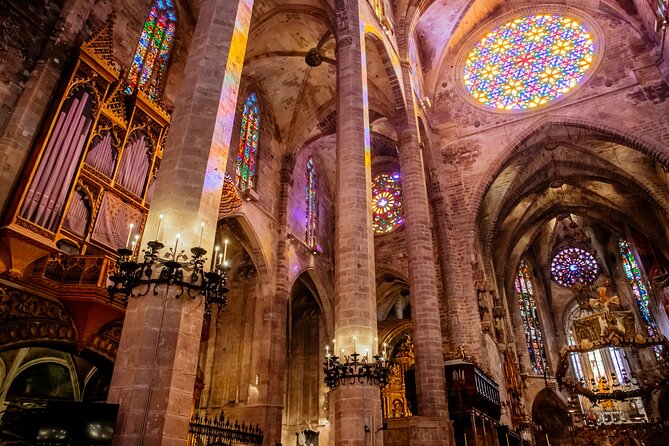
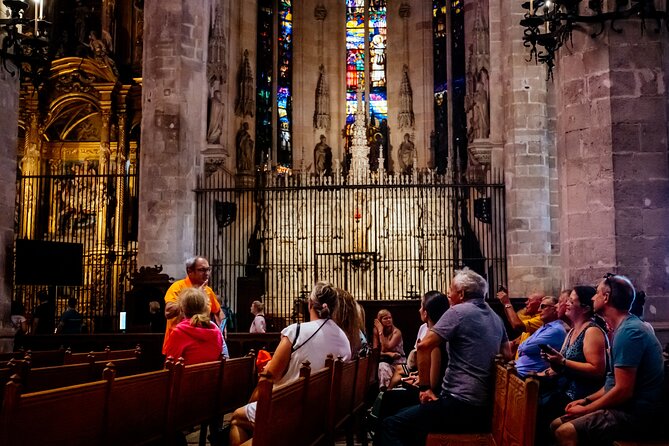
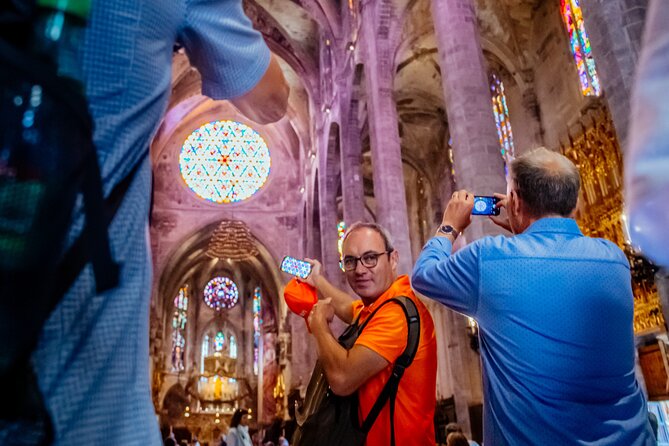
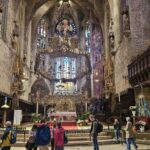
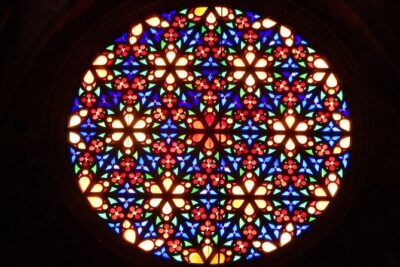
La Seu's rose window from inside
- Mallorca Shore Excursion Bellver Castle and Cathedral Private Tour
★ 5.0 · 4 reviews - Mallorca Cathedral Skip The Line Tickets
★ 3.5 · 3 reviews - Palma: Cathedral of Mallorca Skip-the-Line Entry Ticket
★ 4.6 · 14,386 reviews
Palma Cathedral and Old Town in 90 minutes
This tour is built for efficiency without feeling like a checklist. You get a focused walk of Palma’s historic center, then you spend the big chunk of time inside the cathedral. If you are only in town for a short stretch, this is a smart way to start.
The route is compact, so your guide can keep telling the story in the right order. I like how the stops connect, from old walls and palace viewpoints to street-level landmarks in the Old Town. You are also not stuck in a long sit-down lesson, you’re moving through real neighborhoods.
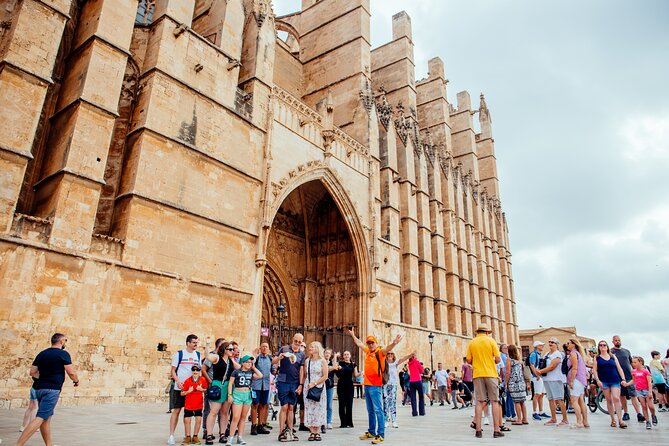
Group size is kept to a maximum of 30, which helps the flow. Still, this is a walking tour in a major tourist city, and the cathedral is famous, so expect busy spaces when you get inside.
Skip-the-line at La Seu: what you will actually see inside
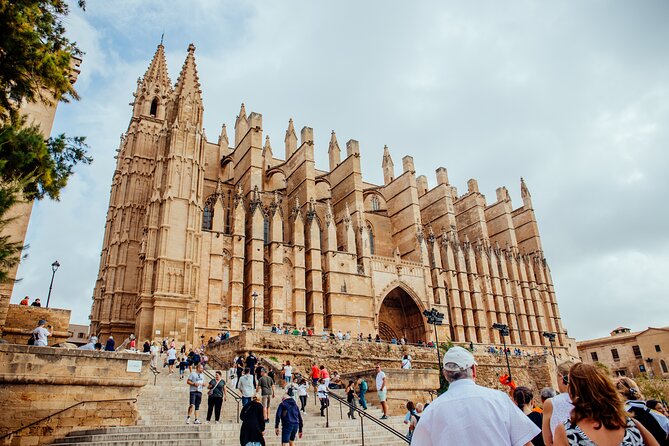
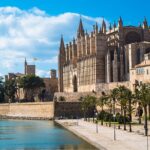
The Mallorca Cathedral, known as La Seu, is the core reason many people book. The skip-the-line ticket matters because cathedral visits are famous for slow entry. By moving you through faster, you protect your time for the parts that actually matter.
You start outside for a short photo moment, then the guide brings the site to life. The cathedral is a Roman Catholic place of worship built on the site of an older Arabian mosque, which helps you understand why the building and its story feel layered rather than straightforward.
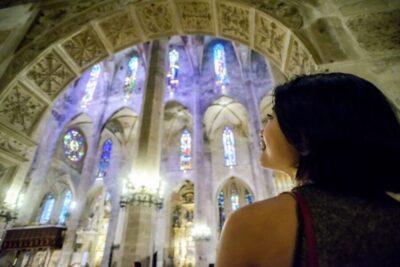
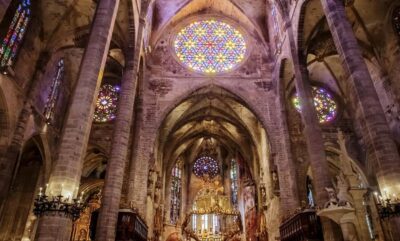
Inside, you can look for the cathedral’s circular stained-glass windows and the Gaudi-designed features. The altarpiece is often treated as the highlight, and it has a reputation for being striking and sometimes controversial. You do not need to be a sacred-architecture expert to enjoy it, because the visuals do the work.
From what I gathered from guide performance, this is also where the tour experience can vary the most by guide. People singled out guides like Juan and Tammy for being fun, personable, and full of detail. If you end up with one of these strong communicators, the cathedral stop can feel like the best part of your day.
Practical reality check: cathedral rooms can be full, and even with a guide, it can get hard to hear from farther back. If you are sensitive to that, aim to position yourself where you can see and hear well early on.
Estatua Es Foner, Jaume Mir, and a quick art detour
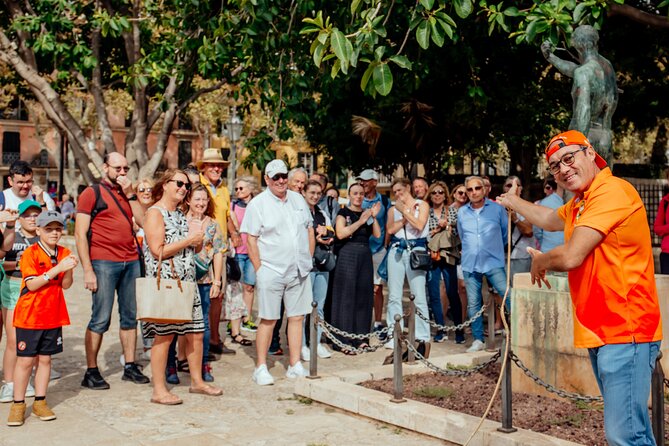
Right as you get going, you pass one of Palma’s most talked-about sculptures: Estatua Es Foner, also called El Hondero. It translates roughly to The Swinger.
This piece was donated by the sculptor Jaume Mir in 1992. Even if you only catch it as you walk by, it is worth a quick pause because it signals something important about Palma: the Old Town is not frozen in medieval time. Modern art and public sculpture sit right alongside historic street life.
I like this stop because it breaks the rhythm after the cathedral prep. It also gives you a moment to look up, not just forward, which helps on a hot day.
S Hort del Rei, the Kings Gardens, and photo-friendly palace views
The tour then shifts into a more garden-and-views vibe at S Hort del Rei, the Kings Gardens. These gardens sit under the Almudaina Palace area. In the 14th century, the access was restricted, and the space was described as full of fruit trees, plants, vegetables, and flowers.
The current garden was renovated in the 1960s by architect Gabriel Alomar. The design drew on traditional Andalusian garden ideas, so you get a style that feels distinctly Mediterranean but still tied to Palma’s local interpretation. Expect cypresses, fountains, and a large pond.
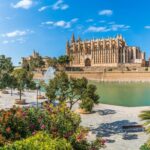
This stop is not long, but it is a relief from street heat and crowds. It also makes the best kind of sense after seeing the cathedral, because you shift from religious monument to lived-in landscape. If you like photos, this is a dependable spot for them, including angles where you can include palace surroundings and garden water features.
One more reason I appreciate garden stops on tours: they give your eyes a rest. Your brain processes the city better after you slow down and look at a gentler scene.
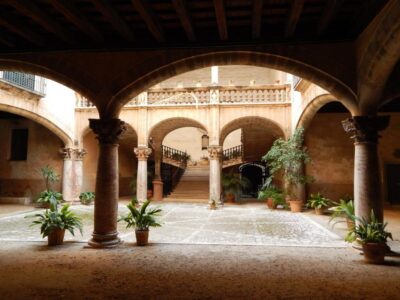
Palma's old streets, on foot
Roman walls and Almudaina viewpoints that explain Palma’s layout
Next comes a section of the Old Town walk along part of the Roman walls built to protect the city. This is the kind of stop that can sound like trivia, but it helps your mental map.
You get views of the Almudaina Palace from above the wall area, plus sightlines over other parts of the city. When you later wander on your own, you will recognize those angles because the guide basically gives you a city atlas you can carry in your head.
This is also where the walk feels properly guided. Instead of just passing buildings, the guide points out what you are looking at and why it matters. Even if the timing shifts with weather, this is a stop that still lands.
Catedral de Mallorca again, then La Almudaina and the civic spine
After the long cathedral moment, the tour moves into what makes Palma feel like a functioning city. You get time to admire the Royal Palace of La Almudaina, which dates back to the 14th century and is the official residence of the King and Queen during stays in Mallorca. Along with the cathedral, it forms a key landmark pairing for Palma.
Then you head toward Plaza de Cort for the Ayuntamiento de Palma, the city hall. This building was constructed between 1649 and 1680 by architects Pere Bauçá, Miquel Oliver, and Bartomeu Calafat.
Pay attention to the façade details: a balcony with seven large windows, the Rellotge d en Figuera clock, and the Banc del si no fos. Those bits are easy to miss if you walk past them on your own, and they are exactly the sort of details a good guide makes memorable.
The Ayuntamiento de Palma was declared a Historic-Artistic Monument, which helps explain why the building is treated as something more than an office.
The Cort Olive Tree and Palma’s symbol of rootedness
In the middle of Plaza de Cort, you will notice the Cort olive tree, Olivera de Cort. It was planted in 1999 from the Tramuntana mountain range as a symbol of peace and rootedness to the land.
Despite the move from the mountain area, it continues to bear fruit every year. I love little symbolic stops like this because they give you a human scale. Palma is full of monuments, but this one connects the city to agriculture and place identity.
If you like stories that make a city feel lived-in, this is a strong stop. It also helps break up the more formal architecture you have been looking at.
Modernism stop: Gaudi influence you can spot without a guidebook
Next is an art-focused building stop with a strong Catalan modernism influence. The decoration runs from façade right through to interior design, with comparisons especially drawn to Gaudi’s style.
You are encouraged to take out your camera, which is usually a sign this is a visual highlight rather than a purely explanatory one. If you are the kind of traveler who enjoys spotting design cues, you will probably get more out of this stop than you expected.
A quick note on expectations: this part is still a walking tour, so you will not be doing a long museum-style visit here unless your departure includes it. But you do get enough to recognize modernist features and understand why Palma’s architecture is not only medieval.
Sa Llotja as your practical lunch handoff
By the time you reach Sa Llotja, the tour has covered the main Old Town highlights. Sa Llotja itself is presented as a quick stop, with admission free, and the guide often uses this moment to steer you toward food.
This is where you get suggestions for lunch and a drink, and it is also a good base for tapas. If you want to continue exploring after the tour, Sa Llotja is a convenient transition point. You can keep walking toward lively streets without feeling like you are starting from zero.
I like tours that end with real-world advice. The best travel days do not end when the tour ends, they simply hand you the right directions.
Price and value at about $33.72 per person
At $33.72 per person, this is not the cheapest walking tour around. But it is priced like an experience anchored by one major paid site: cathedral entry with a skip-the-line ticket.
You also get official guide services, the cathedral museum entrance, and a city map. You are paying for time, expert narration, and the shortcut at the cathedral.
So when is it good value? If you want a guided orientation through Palma’s Old Town and you definitely want inside access to La Seu without wrestling queues. If those are your priorities, the price starts to make sense fast.
When might it feel less worth it? If you only care about the cathedral exterior or if you are expecting lots of separate long visits beyond the one main interior. Some people felt the cathedral was the main event and the rest was lighter. If that would bother you, consider pairing this with an additional Palma-specific visit later in your trip.
Logistics that can trip you up, and how to avoid it
This is where I’d be smart if I were you, because the tour is simple in concept but not always simple in execution on busy days.
First, the meeting point matters. The start point is Mallorca Free Tour at Carrer del Moll, 3 in Palma. Several comments in the data point to confusion about finding the right spot, and at least one person said the meeting point address seemed wrong on their ticket info. Your safest move: arrive early and be ready to contact the guide if needed.
Second, groups can affect the experience inside the cathedral. Even with a maximum group size of 30, a crowded interior can make it hard to hear the guide if you are not near the front. Also, while the tour is offered in English, some departures appear to mix languages. If you are only comfortable in English, position yourself so you can follow better.
Third, timing can shift with heat and pace. One comment described a very hot day and slow walkers, and the guide managed the situation. That suggests flexibility is possible, but you should still plan your day like the tour is not a precision clock, especially outside peak season.
If you want the smoothest experience, do this: wear comfortable shoes, bring water, and don’t plan a tight appointment right after the tour. Cathedral visits also mean you may be exposed to sun and crowds before you get relief.
So, should you book this Palma Old Town and Cathedral tour?
I’d book it if you want a fast, guided start in Palma and you plan to spend time at Mallorca Cathedral anyway. The skip-the-line ticket plus a real guided interior visit is the kind of combo that saves both time and stress.
I’d hesitate if you hate crowd noise or you need crystal-clear audio from start to finish, because the cathedral can be busy and hearing can vary depending on where you stand. I’d also think twice if you are expecting a long list of multiple paid attractions. This tour is built around the cathedral and the Old Town walk, not a tour of ten separate heavy-hitter museums.
If you do book, you will get the most out of it by doing two things: find the meeting point early, and commit to being near the front inside La Seu. Then you’ll leave with a stronger understanding of how Palma’s Old Town connects, from Roman walls to royal palace viewpoints and the civic heart around Plaza de Cort.
FAQ
How long is the Mallorca Old Town Walking Tour with Cathedral skip-the-line?
The tour is approximately 1 hour 30 minutes, with about 45 minutes spent in the cathedral.
What is included in the ticket price?
It includes a city tour, a cathedral skip-the-line ticket, entrance to the cathedral museum, an official guide, and a city map.
What cathedral time do I get on the tour?
You get around 45 minutes inside Palma Cathedral, with admission ticket included.
Is the tour in English?
The tour is offered in English.
Where do I meet the guide?
The tour starts at Mallorca Free Tour, Carrer del Moll, 3, Centre, 07012 Palma, Illes Balears, Spain.
Does the tour end at the same place it starts?
Yes. The activity ends back at the meeting point.
Are food and drinks included?
No. Food and drinks are not included.
What is the cancellation policy?
You can cancel for a full refund up to 24 hours before the experience’s start time. If you cancel less than 24 hours before, the amount paid is not refunded.
What is the maximum group size?
The maximum group size is 30 travelers.
Walking Tours of the Island

More Skip the Line in Palma de Mallorca
Fresh on the Island
- Visit two of the most beautiful villages of Mallorca on a private tour★ 5.0 · 1 review
- Paddle surf excursion★ 5.0 · 1 review
- Arrival Transfer Palma de Mallorca Airport PMI to Palma Downtown★ 5.0 · 1 review
- Tour Estadi Mallorca Son Moix , stadium of RCD Mallorca★ 5.0 · 1 review
- Palma Acquarium with Transfer★ 5.0 · 1 review
- Motorcycles Custom Rent – Easy Rider Mallorca★ 5.0 · 1 review
- Capture Mallorca – A Unique Photographic Experience★ 5.0 · 2 reviews
- Full Day Private Shore Tour in Palma de Mallorca from Palma Port★ 5.0 · 2 reviews
Palma Cathedral Tours, compared.
Cathedral of Mallorca Skip-the-Line Entry Ticket
Read our review →
Palma Old Town & The Cathedral of Mallorca with Mallorcan pastry
Read our review →
Jetski Tour to the Emblematic Palma Cathedral
Read our review →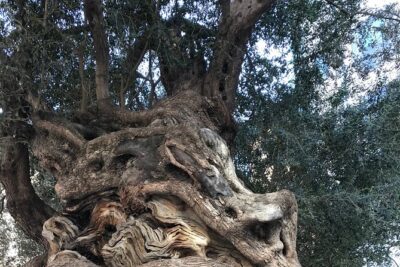
Browse the lists this tour appears in