
Reviewed · MALLORCA
Mallorca: Psicobloc / Deep Water Soloing (DWS)
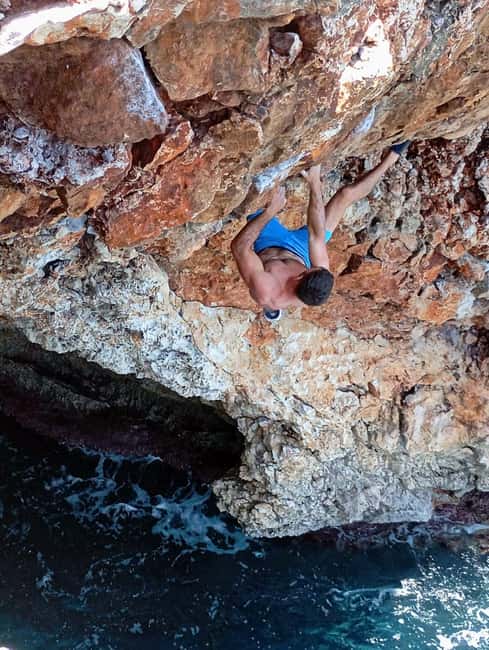
Cliff climbing meets the ocean, no ropes. On Mallorca at Cala Sa Nau, Psicobloc turns climbing moves into jump-offs over the sea, guided step by step so you can feel brave fast. I love that the routes can be matched to your level, from easy lines near the water to tougher climbs higher up. I also like the small group feel, because it makes the safety talk practical instead of rushed.
The catch is that it is rope-free and jump-based. If you are a non-swimmer or not comfortable with heights and splash landings, this is not the right activity for you, even if you are curious.
In This Review
- Key things to know before you go
- Rope-free Psicobloc over Mallorca’s sea cliffs
- Getting to the cliffs from Parking Cala Sa Nau
- The safety briefing that makes the jumps make sense
- Building confidence with routes that scale to you
- Jumping into the sea, and why it feels so freeing
- The short itinerary, paced for a full 4 hours
- What to bring (and what can ruin your day)
- What’s included, and how that affects the value
- Who should book, and who should skip Psicobloc
- How to make it your best day
- Should you book this Mallorca Psicobloc session?
- FAQ
- Where does the Psicobloc (DWS) experience start?
- How long is the tour?
- Is this activity suitable for beginners?
- What gear is included?
- What should I bring with me?
- Who is it not suitable for?
Key things to know before you go
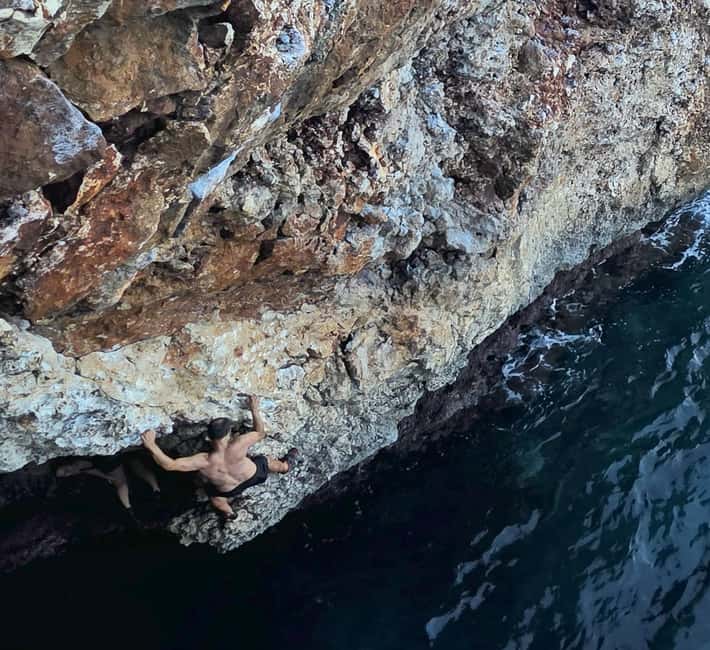
- Rope-free climbing (no harnesses, no ropes) with jumps into the sea as part of the fun
- Routes by difficulty, so beginners can start close to the water and build confidence
- Guide stays nearby, helping you assess height and choose the right jump plan
- All the core gear is included: climbing shoes, chalk bag, and chalk
- Small group size up to 8, which makes feedback and pacing feel personal
- The whole experience is built around Mallorca’s wild coastline
Mallorca is bigger than its beach towns — the interior moves at a different pace.
- Palma: Cathedral of Mallorca Skip-the-Line Entry Ticket
★ 4.6 · 14,386 reviews - Palma de Mallorca: 5-Hour Catamaran Cruise with Lunch & Swim
★ 4.5 · 9,957 reviews - Porto Cristo: Caves of Hams Entry Ticket
★ 4.2 · 6,548 reviews
Rope-free Psicobloc over Mallorca’s sea cliffs
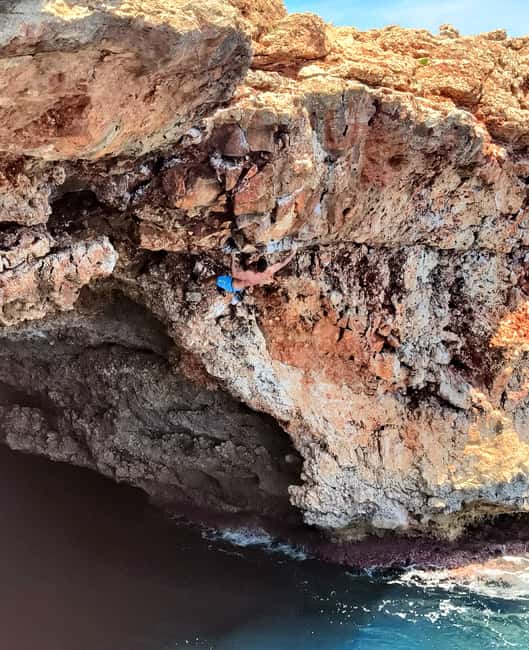
Psicobloc is one of those ideas that sounds simple until you’re standing above water with the wind in your face. You climb a cliff and then jump into the sea, and the whole point is that you do it without ropes or a harness. It is just you, the rock, and the sea, plus a guide who keeps the safety basics front and center.
What makes it feel special on Mallorca is the setting. You are not in a climbing gym. You are on real coastal rock with waves below and sea spray in the air. When you top out, the next moment is not “lowering.” It is planning your jump and trusting the water to catch you.
I also appreciate the mindset shift. Instead of thinking of this as a pure climbing challenge, it’s a sport-and-nature combo. You get the achievement of solving the route, then the release of a cool-down jump that resets your body and your focus.
Getting to the cliffs from Parking Cala Sa Nau
Your session starts at Parking Cala Sa Nau. From there, there’s a short walk to the cliffs, about 10 minutes on foot. It’s enough time to get oriented, but not so long that you lose the energy you need once you’re close to the climbing area.
Once you reach the meeting area by the rock, you’ll do a brief intro before anyone ties into the routine. You’ll get background on this style of climbing that was born on the island, and you’ll hear what makes the experience different from usual climbing days.
This walk and intro matter more than they sound. It’s how you move from “watching from the parking lot” to actually reading the rock and the water. You also get your bearings early, which helps a lot when the plan includes jumping from different heights.
The safety briefing that makes the jumps make sense
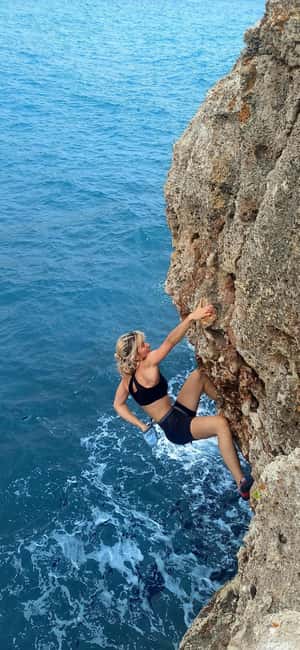
Before you climb, the guide explains the key safety rules. You’ll cover how to assess the height and how to jump into the water in a way that reduces risk. The briefing also includes what to do if you have to fall, with an emphasis on avoiding injury.
That part is worth taking seriously. In rope-free climbing, you do not have the safety net of a rope system catching you. So the goal is not to be fearless. The goal is to be smart with the limits of your ability, and to choose the jump height that matches your comfort level.
You should expect the guide to talk through the plan before each section of climbing starts. You’ll also get guidance on pacing, like when to try an easier line first, then move up when your confidence is there.
And since the session is designed for multiple levels, the guide’s job is not just “watching.” It’s supervising and adjusting. That includes telling you when a route is a good match and when it’s better to keep things lower and safer.
Building confidence with routes that scale to you
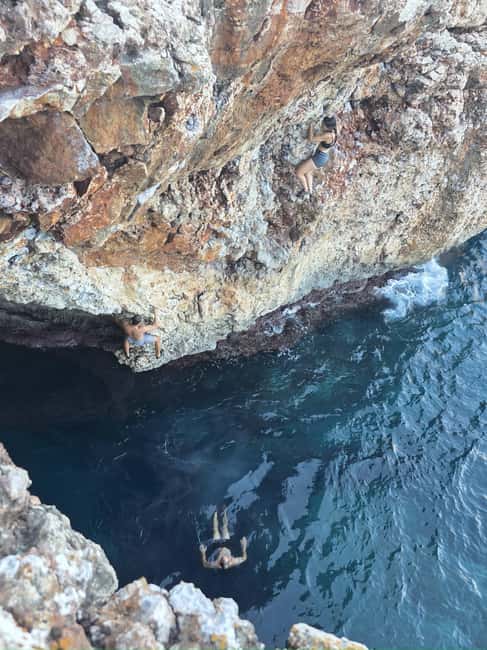
Previous climbing experience is recommended, but this activity can be adapted. That’s the promise, and it’s backed by how the day is structured: beginners get routes near the water, and more advanced climbers can go higher or tackle more challenging lines.
In practice, you’ll do a sequence of climbs where you can feel progress during the same 4-hour session. You start with easier options to get used to the feeling of climbing right above sea water. Then, once you’ve handled the first nerves and learned the movement rhythm, you can move up a level.
I like that the guide keeps the route choices tied to real comfort, not some ego test. You are not expected to jump higher just because you can technically climb. The best days are when you line up your climbing goals with your jump comfort.
Another bonus: you get a chalk bag and chalk included, plus climbing shoes. That removes one of the annoying friction points for active travelers. You still need to bring the personal items (more on that soon), but the core climbing setup is covered.
Boats, caves, and mountain roads — Mallorca rewards a rental car or a good captain.
Jumping into the sea, and why it feels so freeing
Between climbs, you can jump into the sea from different heights. The jump is not a random bonus. It’s part of the technique and the flow of the activity. After each climb, you get that moment where you’re done with the hard part, then you commit to the next step and let gravity do its job.
That moment is often the highlight for people who like adrenaline, and it’s also the coolest way to cool off. After a tougher section, the jump resets you quickly. You get the splash, the shock of cold water, and a clear brain again for the next climb.
There’s also a psychological payoff. Psicobloc forces you to face fear in a controlled way, then move forward anyway. When it goes well, it’s not just adrenaline. It feels like achievement with a view.
One more important detail: since you are jumping into the sea, you need to be comfortable in water. That is why the activity is not suitable for non-swimmers. If you hesitate at the basic idea of swimming, this sport will feel stressful instead of fun.
The short itinerary, paced for a full 4 hours
This experience runs about 4 hours. The basic rhythm is straightforward, but it works because it alternates effort and release.
- You start at Parking Cala Sa Nau, then walk around 10 minutes to the cliffs.
- You get a guided session on the coast where climbing and jumping alternate.
- The climbing blocks are followed by jump opportunities from heights matched to your level.
Even though the total time is short, it does not feel like a quick hit. It’s long enough to try multiple routes, adjust your comfort, and actually learn the pacing from the guide.
Also, with a small group limited to 8 participants, you spend less time waiting. That matters in a high-focus activity. The longer you sit around, the more nervous you can feel. The better days are when you’re moving through the sequence with support nearby.
What to bring (and what can ruin your day)
Bring swimwear, a towel, food, sunscreen, water, and sports shoes. That list is simple, but each item plays a role.
Swimwear is obvious, but it’s also about comfort. You want something you’re not worried about when you’re climbing and then jumping. A towel is non-negotiable, especially if you’re traveling afterward, because saltwater plus sun can leave you cold and sticky.
Food and water are important because the activity is active the whole time. You’re climbing, stopping, jumping, repeating. Even if you’re not hiking for hours, you still burn energy. Sunscreen is just as vital. Coastal sun can hit hard when you’re in open air and sea breeze.
Sports shoes are recommended because you need appropriate footwear for the walk and the ground approach. Even though climbing shoes are provided, you still want something stable for the pre-climb portion.
What’s included, and how that affects the value
The price is $82 per person for a 4-hour guided session. What makes it feel like good value is that you get more than just a guide. You also get climbing shoes, a chalk bag, and chalk.
For many active tours, you end up paying extra for gear or you end up renting something incomplete. Here, you show up and the core climbing equipment is already handled. That’s one reason the total cost feels reasonable for the experience you get.
You also get a qualified local guide and a small group capped at 8. That combo matters in a rope-free activity where safety decisions are practical, not theoretical.
One more value point: this is a format that gives you a memorable coastline experience without needing a bigger expedition day. If you are comparing alternatives, some people add other coastline activities later, like boat outings. The key difference is that with Psicobloc, you are the one climbing and committing to the jump, not just observing from the water.
Who should book, and who should skip Psicobloc
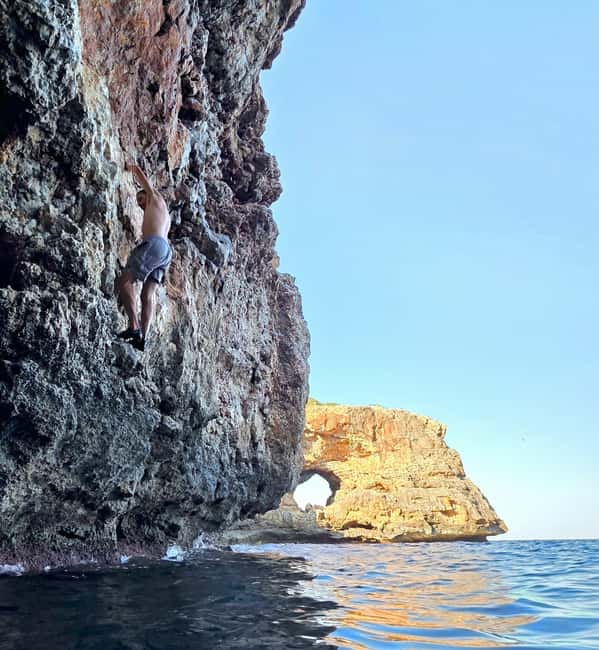
This experience is for people who want adrenaline, achievement, and a real connection to Mallorca’s coast. It’s also ideal if you like active travel where the scenery is part of the challenge, not just a background.
It’s adapted for beginners through advanced climbers. Still, you should be ready for height and jumping. If you get panic when you think about jumping into open water, you will likely have a tougher time enjoying the climbs.
It is not suitable for pregnant women and non-swimmers. And the day includes rules like no alcohol or drugs, plus no littering. Those are standard for any serious outdoor activity, and they matter here because you’re operating in a natural coastal environment where safety needs focus.
Sea conditions can also affect the day. Since safety can require changes, you should keep a little flexibility in your schedule. The operator may adjust when the sea is not right for jumps and climbing.
How to make it your best day
If you want this to feel exciting instead of stressful, plan for the basics.
Eat something before you go, bring water, and then avoid overthinking the hardest part. Your best approach is to start with the easiest routes, learn how the rock feels under your feet, and then let the guide help you step up only when you’re ready.
Also, use the towel and sunscreen like you mean it. Cooling off with a jump is fun, but it does not replace hydration and sun protection.
Finally, stay open to the idea that your day might shift slightly based on sea safety. That’s not a failure mode. In water-based sports, the ocean decides. The best travelers are the ones who roll with it and show up ready.
Should you book this Mallorca Psicobloc session?
If you are a confident swimmer, comfortable with heights, and you want a rope-free climbing experience that includes real sea jumps, this is a fantastic way to spend 4 hours in Mallorca. The small group size, included gear, and level-matched routes are exactly what make it beginner-friendly without turning it into a toy.
Skip it if you are a non-swimmer or if jumping from a height sounds like a deal-breaker. And if you hate schedule flexibility, keep in mind that safety-related sea conditions can change the plan.
If you want a Mallorca activity that feels genuinely different from beach time, this is one of the few options where your effort, your courage, and the coastline all happen at the same time.
FAQ
Where does the Psicobloc (DWS) experience start?
It starts at Parking Cala Sa Nau. Your guide will be there and you can recognize them by their bright green T-shirt with the Mes Aventura logo.
How long is the tour?
The experience lasts 4 hours.
Is this activity suitable for beginners?
Yes. Previous climbing experience is recommended, but the activity can be adapted to different levels, with easier routes near the water for beginners.
What gear is included?
You get climbing shoes, a chalk bag, and chalk. A qualified local guide is also included.
What should I bring with me?
Bring swimwear, a towel, food, sunscreen, water, and sports shoes.
Who is it not suitable for?
It is not suitable for pregnant women or non-swimmers.
Fresh on the Island
- Mallorca: Sail on a traditional boat to explore hidden beaches★ 5.0 · 2 reviews
- High-Speed Speedboat Adventure in the Bay of Alcudia★ 5.0 · 2 reviews
- Palma de Mallorca Street Food Tour With A Local Guide★ 3.5 · 2 reviews
- Palma tours with Cathedral and Valldemossa options★ 5.0 · 2 reviews
- Mallorca: Private Boat Tour with Snorkeling & Snacks★ 5.0 · 2 reviews
- Sip & Paint in the heart of Palma´s old town★ 5.0 · 2 reviews
- Soller’s Secret Stories: An Audio Tour by Travel Author★ 4.5 · 2 reviews
- Dragonera Boat Tour from San Telmo★ 5.0 · 2 reviews