
Reviewed · COASTEERING TOURS
Mallorca: Coasteering North
Eight jumps sound scary, then great.
This Mallorca coasteering circuit runs along the Alcudia cliffs and mixes sea caves, cliff moves, and a rope-free section (psicobloc) for a full-on summer adventure.
I especially like the 8 jumps into the water, each at a different height, so you can build confidence step by step. I also like the calm coaching style, with guides such as Juanfran explaining technique so you know how to land and move with control.
The main drawback is straightforward: this is not for everyone. You need to be a strong swimmer and comfortable with jumping and climbing right by the sea.
In This Review
- Quick hits before you go
- Coasteering North at Alcudia cliffs: why this circuit feels worth the effort
- Meeting at Carrer Fonoll, 8 and what the first part of the day feels like
- The jump-by-jump rhythm: 8 entries into the sea (2 to 7 meters)
- DWS and psicobloc traverse: rope-free moves up to 2 meters
- Rappel about 8 meters: how abseiling fits into the circuit
- Marine tunnels and sea cave moments, with safety-based route tweaks
- Guides in the mix: patient coaching and technique-first instruction
- What you actually get for $77 in 3 hours
- What to bring for Alcudia coasteering (and what to wear)
- Who should book, and who should skip this coasteering circuit
- Should you book Mallorca: Coasteering North?
- FAQ
- How long is the Coasteering North experience?
- Where is the meeting point?
- How much does it cost?
- Is there a small group size limit?
- What activities are included?
- How high are the jumps into the sea?
- What is DWS or psicobloc?
- What should I bring?
- What if I do not want to do abseiling or jumping?
- What if the sea conditions are unsafe?
Quick hits before you go
- Alcudia cliffs base: a coastal circuit designed to show you the north coast close up
- 8 sea entries: jumps from about 2 to 7 meters, each one different
- DWS / psicobloc: climbing without a rope, max 2 meters from sea level
- 8-meter rappel: an abseil that turns the route into a real technical circuit
- Marine tunnels and caves: you move through sea passages when conditions allow
- Small group: limited to 10 participants, with Spanish and English instruction
Scramble the rocks, then jump in
- Mallorca: Kayaking, Sea Cave, Cliff Jumping & Snorkel Tour
★ 4.8 · 1,447 reviews - Mallorca: Kayaking, Sea Cave, Cliff Jumping & Snorkel Tour
★ 5.0 · 769 reviews - Mallorca: Half-Day Coasteering Experience
★ 4.7 · 447 reviews
Coasteering North at Alcudia cliffs: why this circuit feels worth the effort
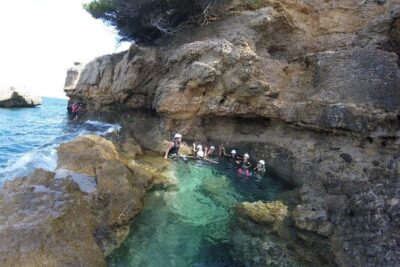
Coasteering is the rare activity where the views are not a side dish. You spend your time right on the coast, working along cliff edges, water level sections, and sea-cave entrances. At Alcudia, that means clear water, dramatic rock, and plenty of “how did they find this spot” moments.
What makes this trip practical is the variety in the same stretch of coastline. You do multiple activity types in one route, so you do not waste time commuting around the island. In about 3 hours, you get jumps, rope-free climbing, and abseiling, plus the bonus of marine tunnels.
Meeting at Carrer Fonoll, 8 and what the first part of the day feels like
You meet at Carrer Fonoll, 8, at the parking place where your guide will be waiting. From there, the program includes a hike as part of the 3-hour experience, getting you to the start of the coastal circuit.
That hike matters more than you might think. It is your transition from heat and expectations into a “follow the guide, move in order” rhythm. It is also where you get your safety head-on straight, so the first entry into the water does not feel like a blind leap.
The jump-by-jump rhythm: 8 entries into the sea (2 to 7 meters)
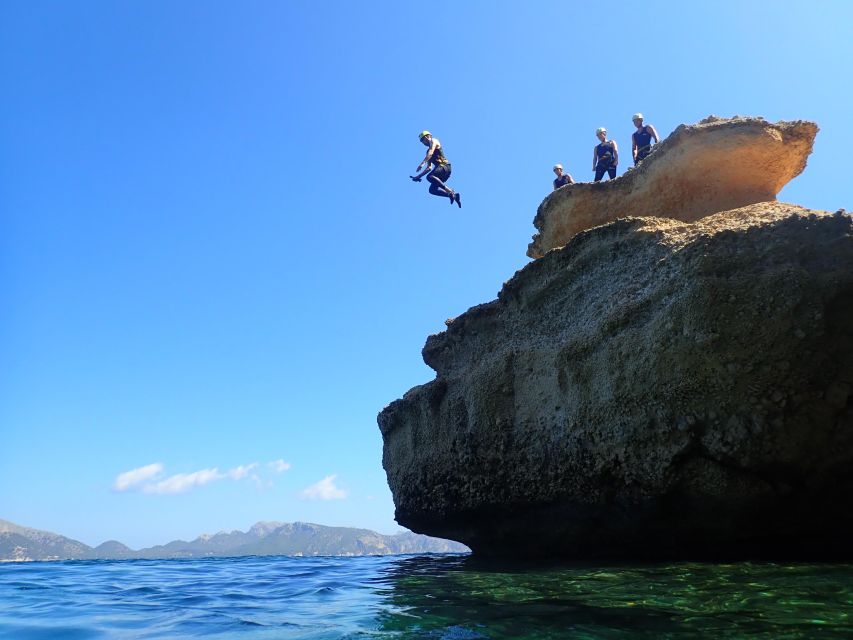
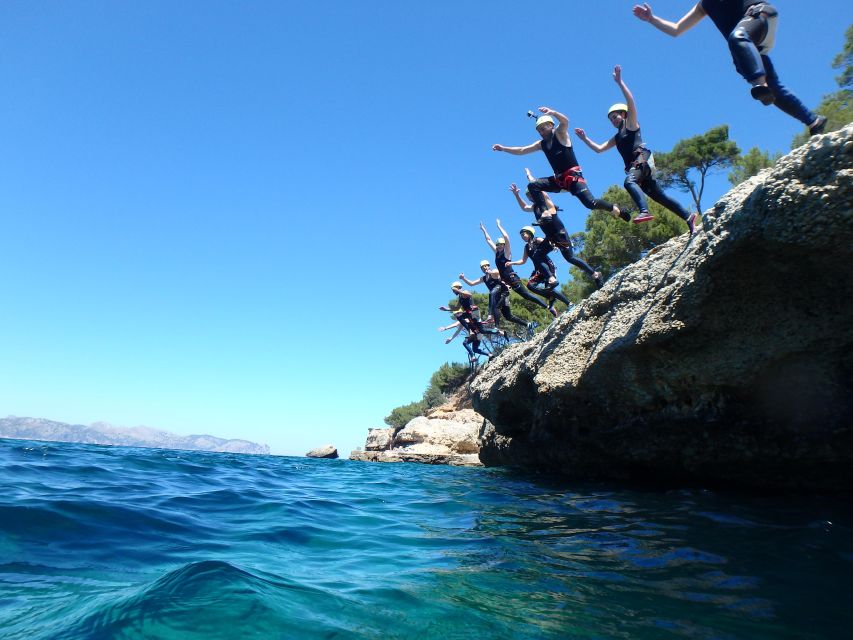
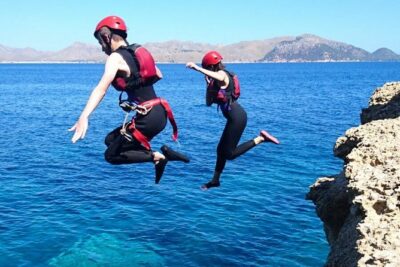
This is the headline feature, and it is set up to be progressive. You do 8 jumps into the water, and each jump has a different height, ranging from about 2 to 7 meters.
You will get time to adapt to the heights because the sequence is not “one scary jump, then done.” The coaching focus is on technique and body position, not on rushing you. Guides have a way of making it feel normal, like you are learning a movement rather than risking a stunt.
One important reality check: you are not doing these jumps in a vacuum. Your group size is small, and conditions can change the exact route and access. If sea conditions affect safety, the guide can adjust what you do.
DWS and psicobloc traverse: rope-free moves up to 2 meters
After the jumps, you switch gears into DWS / psicobloc. This is climbing without a rope, at a maximum of 2 meters from sea level.
The value here is confidence-building. Instead of facing only vertical drops, you get to practice controlled movement on wet rock, then transition into the water. It also gives the route texture, so you are not repeating the same action the whole time.
Do not underestimate the mental side. Rope-free climbing means you rely on technique and pacing, guided by your instructor. If you are the kind of person who likes clear instruction and step-by-step progress, you will probably click with this part.
Boats, caves, and mountain roads — Mallorca rewards a rental car or a good captain.
Rappel about 8 meters: how abseiling fits into the circuit
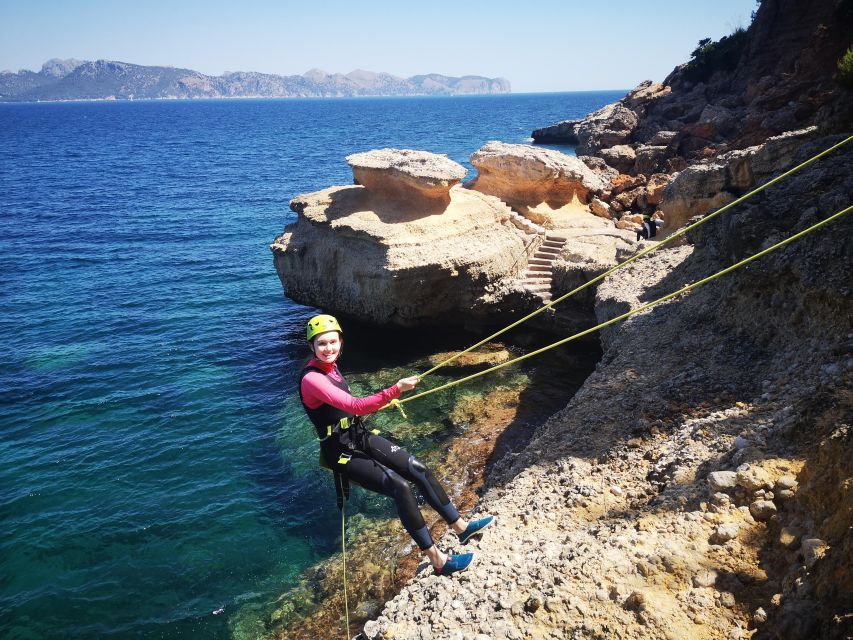
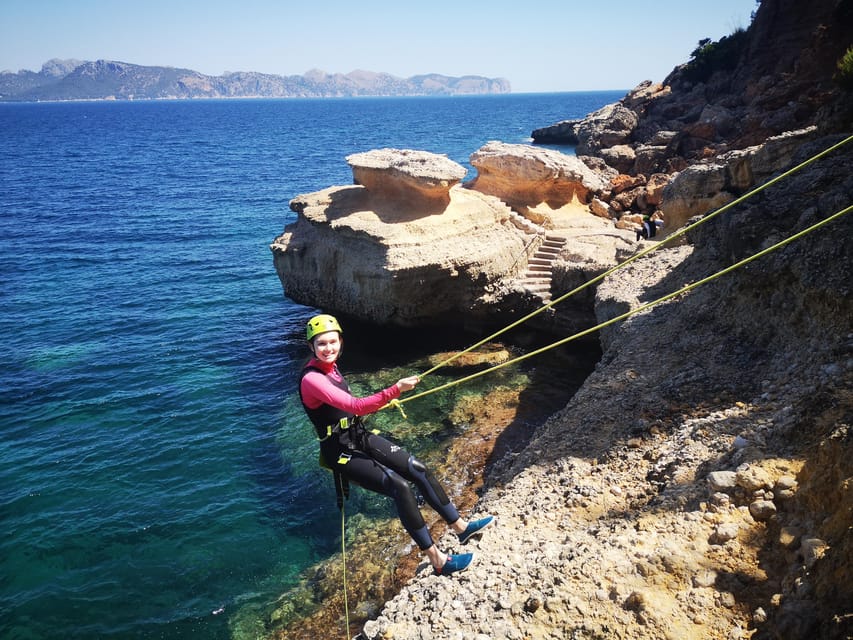
Abseiling is part of the same north-coast itinerary, and it is about an 8-meter rappel. This is the moment when the trip becomes more technical, because you are controlling descent along rock and setting up your next water entry.
The good news is you are not thrown into it without guidance. The guides emphasize how to handle body position and movement so you land and continue safely. In past groups, guides like Alfonso have been described as patient and focused on helping people push past their own limits without pressure.
If you do not want to abseil, you can usually skip it. The route can be adjusted to your needs, and you are not required to do every element.
Marine tunnels and sea cave moments, with safety-based route tweaks
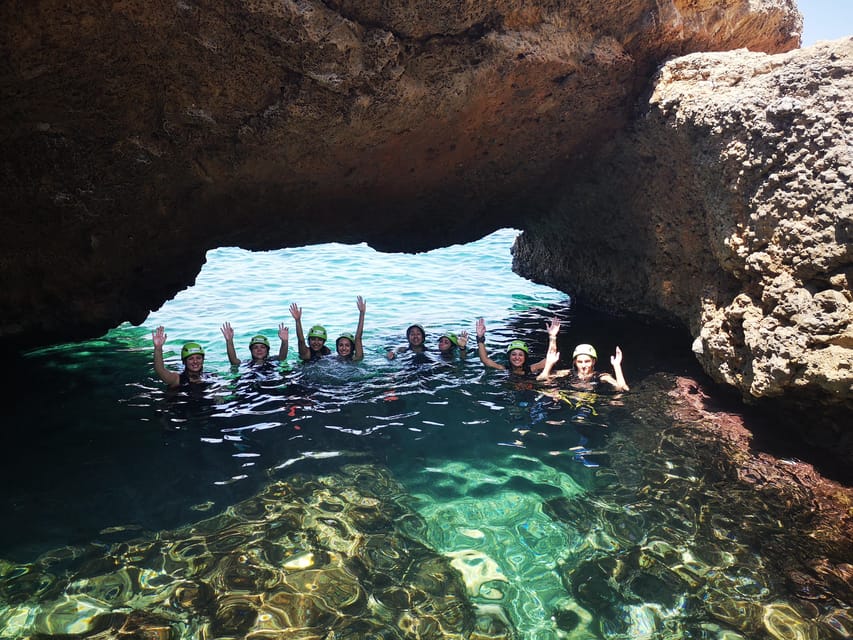
One of the coolest parts of the day is moving through marine tunnels. It is the kind of scenery you do not get from a ferry window, because you are close enough to feel the sea and see the rock textures up close.
Cave access can depend on conditions. If sea conditions make access unsafe, the guide can adjust the schedule or modify the route. In those cases, there are no refunds when access to caves becomes unsafe.
That policy is annoying on paper, but it is actually the sign of a responsible operator. Coasteering is weather and wave sensitive. If you want an activity that prioritizes safety over “we promised a photo,” you will likely appreciate that approach.
Guides in the mix: patient coaching and technique-first instruction
This is a group activity, but it does not feel rushed. Small groups of up to 10 mean you get attention when you need it. Your instructor speaks Spanish and English, and the vibe is meant to be calm and reassuring, especially for first-timers.
Names that have come up include Juanfran, Alfonso, and Dany. Across these styles, the common theme is clear explanation and encouragement, including advice about jump technique that helps protect your neck and lower back. The best part is the lack of pressure, meaning nobody is treated like a slowpoke for needing an extra moment to commit.
Also, you may have the chance to wear swimming vests depending on how your group handles the water. In some groups, safe swimmers have chosen to skip them to keep the experience more free.
What you actually get for $77 in 3 hours
At $77 per person for about 3 hours, the value is in how packed the session is. You are not just paying for one thrill. You get a coordinated circuit that includes:
- 8 jumps into sea water (about 2 to 7 meters)
- DWS / psicobloc traverse (rope-free, max 2 meters from sea level)
- Rappel about 8 meters
- Marine tunnels and cave sections
- Stunning coastal views from up close
The “value” angle is simple: you are paying for guided access, safety setup, and time-efficient variety. If you tried to piece this together on your own, it would likely cost more in both money and effort, and it would not be the same kind of organized circuit.
What to bring for Alcudia coasteering (and what to wear)
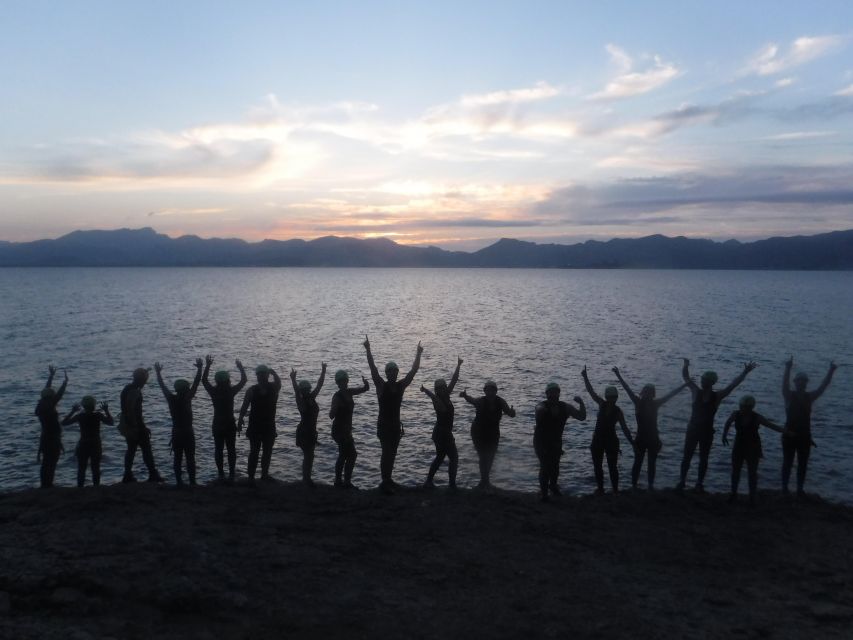
Wear swimwear. Bring a towel, sunscreen, and water. You will also be much happier if you have proper footwear.
Try to bring your own booties with a rubber sole. If that is not possible, the operator will provide them. Rubber sole grip matters because rock can be slick, and you want stable footing for climbing and transitions.
One more thing: alcohol and drugs are not allowed. Also, please do not plan on littering. You are in a fragile coastal environment, and the activity rules reflect that.
Who should book, and who should skip this coasteering circuit
This trip works well for people who want hands-on action but still want coaching. You do not need previous experience, and it is designed to be accessible in the sense that guides adjust and teach technique.
It is not suitable if you are pregnant. And it is not for non-swimmers, because you will be entering the sea multiple times and handling water transitions.
If you are nervous about certain components, you can often adjust. If you do not want to do abseiling, zip-line, or jumping from high places, you can skip those parts and the guide can tailor the route to your comfort.
Should you book Mallorca: Coasteering North?
Book this if you want a true “do stuff” coastal experience in the summer, not a passive sightseeing stop. The mix of 8 sea jumps, rope-free climbing (psicobloc), an 8-meter rappel, and marine tunnels gives you a complete circuit in a short time.
Skip it if you are not comfortable swimming, or if rope-free climbing near the sea sounds stressful. Also think twice if you hate sudden route changes based on sea conditions, since cave access can be modified for safety.
If you like clear instructions, patient pacing, and a guide-led push toward better confidence, this is the kind of Mallorca adventure that tends to leave people feeling proud, even if their legs were shaking at first.
FAQ
How long is the Coasteering North experience?
It lasts about 3 hours.
Where is the meeting point?
Meet at the parking place at Carrer Fonoll, 8.
How much does it cost?
The price is $77 per person.
Is there a small group size limit?
Yes. It is limited to 10 participants.
What activities are included?
The experience includes 8 jumps into the sea, a DWS/psicobloc traverse, an abseil about 8 meters, and marine tunnels.
How high are the jumps into the sea?
The jump heights range between about 2 and 7 meters, with 8 jumps in total.
What is DWS or psicobloc?
It is climbing without a rope at a maximum of 2 meters from sea level.
What should I bring?
Bring swimwear, a towel, sunscreen, and water. Booties with a rubber sole are recommended if you have them.
What if I do not want to do abseiling or jumping?
You can skip those parts, or the guide can adjust the route to fit your needs.
What if the sea conditions are unsafe?
The activity might be cancelled for safety reasons if conditions are unsafe, and you will be informed in advance. If sea conditions make cave access unsafe, the guide can adjust the schedule or modify the route, and no refunds are issued for that adjustment.
Fresh on the Island
- Island Tour with Train Tram Boat and Bus from Cala Millor★ 4.5 · 8 reviews
- Tuk Tuk Tour in Palma de Mallorca★ 3.0 · 8 reviews
- Evening 2 hour Segway Tour of Palma★ 5.0 · 8 reviews
- Rental bicycles★ 4.0 · 8 reviews
- Peguera: Quad Tour★ 4.3 · 8 reviews
- Electric kick scooter rental in Palma de Mallorca★ 4.5 · 8 reviews
- Afternoon Snorkel & Paddle Surf Experience in a Secret Spot★ 5.0 · 8 reviews
- Mallorca: Gastronomic Wine Tasting & Local Delicacies★ 5.0 · 8 reviews
Coasteering Tours, compared.
Kayaking, Sea Cave, Cliff Jumping & Snorkel Tour
Read our review →
Kayak Tour with Caves, Snorkeling and Picnic (+ Cliff Jump)
Read our review →
Small-Group Cliff Jumping Experience in Mallorca
Read our review →
Browse the lists this tour appears in