
Reviewed · COASTEERING TOURS
Coasteering Cliff jumping
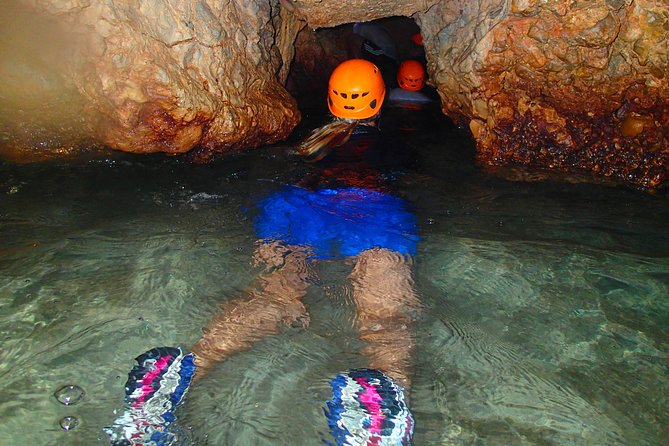
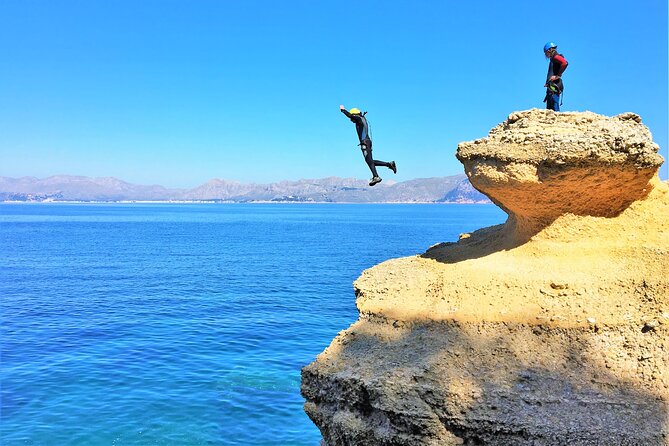
Coasteering turns a normal coastline walk into a hands-on adventure. This 3-hour Mallorca outing in Alcudia mixes climbing over the rocky coast with cliff jumps into the sea, then adds snorkeling, abseiling, and even water cave moments. It is a small-group format, capped at 10, so the experience stays personal rather than rushed.
My favorite parts are the fact that you get the right safety gear and you are guided one-on-one through each move, not just left to figure it out. You also get a route-style day that feels like a string of different mini-adventures along the shoreline. The main thing to consider is simple: this activity needs good weather, so plans can shift if conditions are rough.
In This Review
- Key highlights at a glance
- Coasteering in Mallorca off Alcudia cliffs, what makes it special
- Price and value for a 3-hour adventure course
- Group size, pacing, and why cap at 10 matters
- Meeting point in Cielo de Bonaire, then two coastal stops
- Stop 1 in Alcudia: getting set up for rock, water, and choices
- Stop 2 at Port d’Alcudia: cliff jumping, snorkeling, abseiling, and sea caves
- What you get from the guides and the safety setup
- Weather rules and what happens if conditions are bad
- What to bring so the 3 hours feel smooth
- Who this coasteering tour is best for (and who should think twice)
- Should you book this coasteering cliff-jumping tour?
- FAQ
- How long is the coasteering cliff jumping tour?
- Where does the tour start and end?
- What time does the tour begin?
- How big is the group?
- What activities are included in the coasteering route?
- Is equipment and safety gear included?
- What does the price include, and what is not included?
Key highlights at a glance
- Small-group cap of 10 keeps attention on you, not the crowd
- Climbing, cliff jumping, snorkeling, and abseiling in one connected coastal route
- Safety gear included, plus hands-on guidance for each challenge
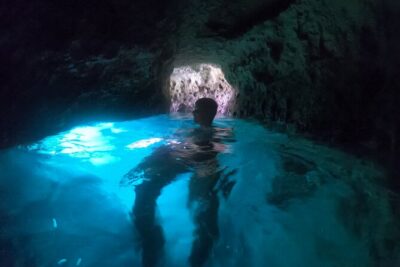
- Sea caves and underwater cave moments are a standout part of the day
- 3-hour format that fits well into an Alcudia itinerary
Scramble the rocks, then jump in
- Mallorca: Kayaking, Sea Cave, Cliff Jumping & Snorkel Tour
★ 4.8 · 1,447 reviews - Mallorca: Kayaking, Sea Cave, Cliff Jumping & Snorkel Tour
★ 5.0 · 769 reviews - Mallorca: Half-Day Coasteering Experience
★ 4.7 · 447 reviews
Coasteering in Mallorca off Alcudia cliffs, what makes it special
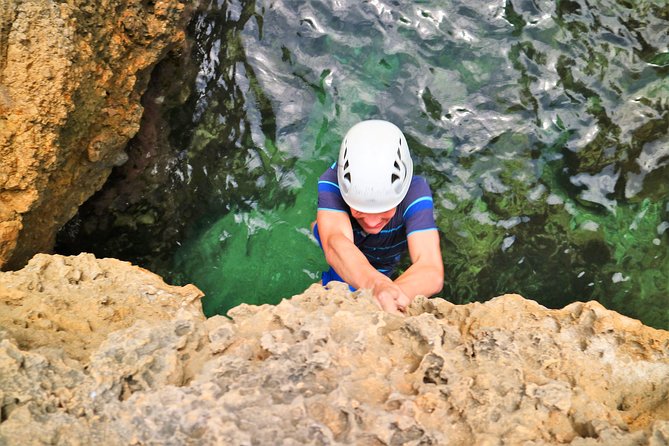
Coasteering is the kind of activity that makes you pay attention to where you are standing. Mallorca’s coastline around Alcudia and Port d’Alcudia is rocky, rugged, and full of sea-level surprises, and the best coasteering tours build a route that uses that terrain instead of avoiding it.
What you are really buying is variety. One stretch might involve climbing over coastal rocks to reach a jump point. Another moment might switch gears to snorkeling, where the coast stops being a barrier and becomes your underwater route. Then you get abseiling into the sea and cave-style sections that turn the shoreline into a playground.
The tone stays adventurous, but the tour is not random. You are moving from one planned stop to the next, guided by the local setup. That structure is what makes the day feel like an experience, not a DIY scramble.
Price and value for a 3-hour adventure course
At $93.97 per person for about 3 hours, this is priced like an active adventure day, not a sightseeing tour. The value comes from what is included in that time window.
You get:
- a driver/guide
- the taxes and fees included in the price
- equipment and safety gear
- one-on-one coaching through the route actions
The part to watch is what is not included. Food and drinks are on you, and you handle transportation to and from the activity. Still, if you want the whole “coastal obstacle course” experience in one go, that package deal is often the reason people choose tours like this instead of piecing together separate activities.
In plain terms, this price makes sense if you want the full combo: jumping, snorkeling, and abseiling, without spending time lining up gear and staff on your own.
Group size, pacing, and why cap at 10 matters
You will feel the small-group limit fast. When the group is capped at 10, the guide can actually watch what you are doing and adjust the plan on the fly. That matters most during the tricky parts, like jumping choices, climbing foot placement, and the moments when you are transitioning from rock to water.
Pacing also tends to be calmer. A bigger group can force a “move fast and hope for the best” vibe. With a smaller group, you get more control over timing. You can take a breath between actions, you can ask a question without waiting, and you can get instructions that match your comfort level.
This is also where the one-on-one guidance becomes more than a marketing line. In water and on rock, micro-instructions matter.
Meeting point in Cielo de Bonaire, then two coastal stops
The tour starts at Carrer Fonoll, 8, 07400 Cielo de Bonaire with a 9:50 am start. It ends back at the same meeting point, which is helpful when you are planning the rest of your day in Alcudia.
From there, the day is organized around two main stop areas:
- Stop 1: Alcudia
- Stop 2: Port d’Alcudia
Even though both are in the same region, treating them as separate stops helps you understand the coast. You get one phase that sets you up for the route, then you shift into the more active coastal action near Port d’Alcudia. That flow is practical, and it keeps the energy building instead of spiking too early.
You also have a mobile ticket, so you do not need to print anything. Service animals are allowed, and the meeting area is near public transportation, which makes it easier to anchor your day even if you are not driving.
Boats, caves, and mountain roads — Mallorca rewards a rental car or a good captain.
Stop 1 in Alcudia: getting set up for rock, water, and choices
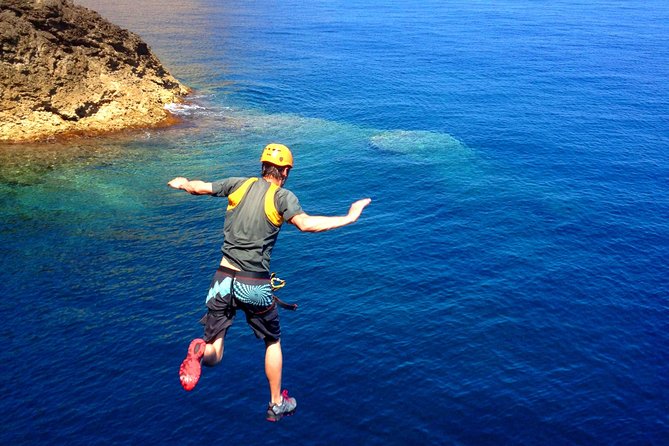
At the Alcudia stop, the day usually focuses on preparation and positioning. Coasteering is part climbing, part water entry, and part timing. If you skip the early setup, the rest of the route can feel stressful.
Here is what you should expect in this phase:
- a safety briefing that sets how the group moves
- getting comfortable with the gear and how it is used
- a warm-up rhythm so you can judge surfaces and entry points
This is also where comfort level matters. Coasteering includes different jump heights, and that means you may not be facing one single “all or nothing” jump. You can go with the options that match your confidence, as long as you follow the guide’s instructions.
A small note from the overall experience style: the guidance tends to be practical and direct. You are not just hearing safety rules, you are being shown how to apply them.
Stop 2 at Port d’Alcudia: cliff jumping, snorkeling, abseiling, and sea caves
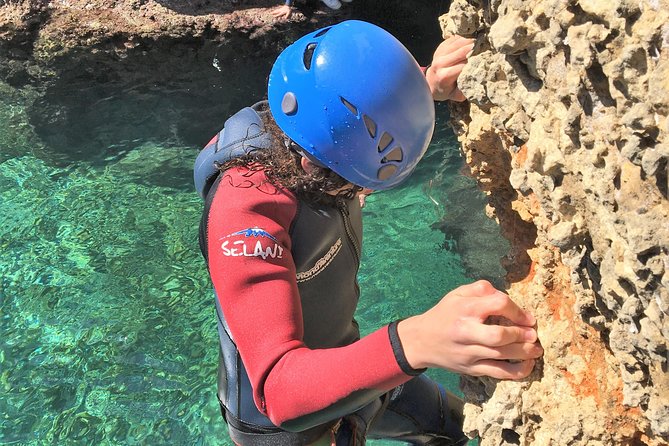
The Port d’Alcudia stop is where coasteering feels most alive. This is the part that turns the coastline into a route of actions. You should plan for a sequence that mixes:
- climbing over coastal rocks with sea-level views
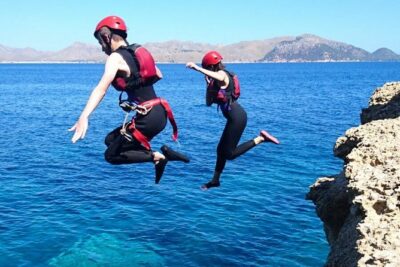
- cliff jumping from different heights
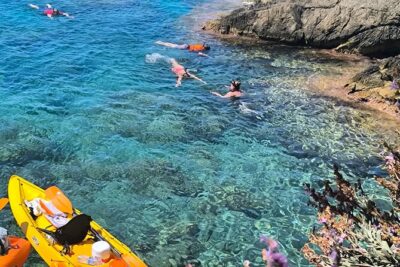
- snorkeling to explore what is under the surface
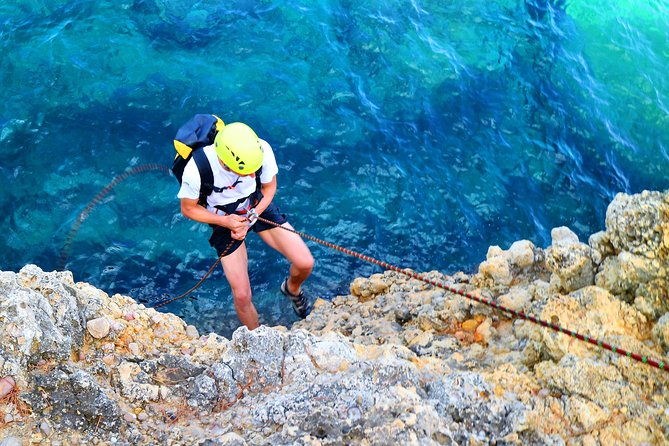
- abseiling with a fall into the sea
- entering water caves and other coastal surprises
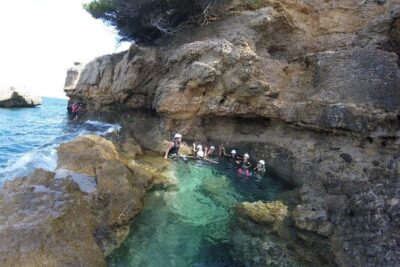
One of the most praised moments is the cave-style portion, including a marine cave element. That is exactly the kind of feature that changes the whole tone of the day. Instead of only seeing the coast from above, you move through it, at water level, with your attention shifting from air to underwater angles.
You should also mentally prepare for transitions. The day is not just “jump then swim then done.” It is jump, recover, regroup, then move again. If you can accept that rhythm, you will enjoy the day more, even when you feel your legs are working harder than expected.
And yes, the water time is real. Even if you focus on the jumping, the snorkeling moments are what make the coast feel connected rather than fragmented.
What you get from the guides and the safety setup
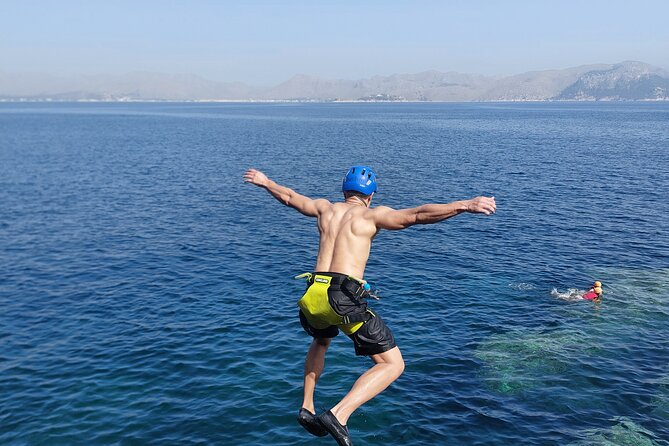
The tour’s biggest strength is how structured the safety support feels. Equipment and safety gear are provided, and the one-on-one guidance approach helps you process each step before you commit.
Here is what that means for you on the day:
- you know what you are attempting before you attempt it
- you get corrections when something is off
- you are more likely to feel calm instead of panicked
That matters because coasteering is action-based. Your body is doing new things: moving over slick rock, judging jump timing, then entering water. The guide’s job is to reduce guesswork, and the guide setup is one of the reasons this tour holds a perfect recommendation rate.
It is also why the day works for “most travelers” as stated by the tour. That does not mean everyone will want every jump or every entry. But the guidance can help you pick a level that fits you.
Weather rules and what happens if conditions are bad
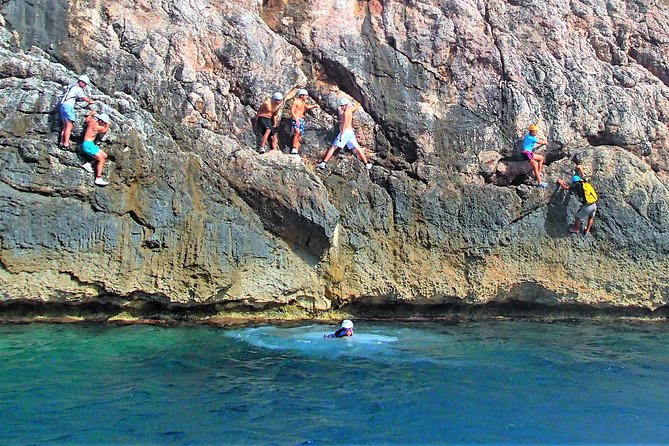
This experience requires good weather. That is not a small detail, it is the gatekeeper.
If conditions are poor, you are offered a different date or a full refund. That is a fair approach, and it is exactly what you want for a water-based activity.
In at least one case, the plan shifted to a similar alternative involving kayaks when the original activity needed adjustment due to conditions. That tells you the operator is trying to keep the fun intact, not just cancel quietly and hope for the best.
My advice: check the forecast the day before and the morning of. If the coast looks rough, plan for the possibility of changes and keep your schedule flexible.
What to bring so the 3 hours feel smooth
The tour covers the active part, including safety gear, but you should still show up prepared. Since food and drinks are not included, you will want to fuel before and hydrate after.
For the day itself, think in terms of:
- swim-ready comfort (you will be in and around water)
- something easy to rinse off after
- a plan for how you will manage wet gear once the activity is done
If you get cold easily, treat it as a real possibility, since coastal water can cool you down quickly. If you run warm, you can still get tired from repeated actions, especially climbing and jumping segments.
Also, arrive with enough time to meet and get briefed. A 9:50 am start is not late morning. Once you are in the workflow, you do not want to be rushing.
Who this coasteering tour is best for (and who should think twice)
This is best for you if you want an active coastal day with variety, and you like the idea of learning the route from a guide rather than improvising it yourself. The combo of cliff jumping, snorkeling, abseiling, and cave moments is a strong fit for people who get bored doing one thing only.
It is also a good option for groups who appreciate structure. The small-group cap at 10 means you are not waiting in line while others go first.
You might think twice if:
- you hate unpredictable surfaces and transitions from rock to water
- you are not comfortable with heights or jumping options
- you are traveling when you cannot handle weather changes
Most people can participate, but your comfort with physical action and water entry matters more than fitness level alone.
Should you book this coasteering cliff-jumping tour?
Book it if you want a small-group coasteering route that mixes climbing, jumping, snorkeling, and abseiling, with safety gear and hands-on guidance. The strong recommendation rate makes sense here, because the experience is built around the things people remember: cave moments and that guided sense of control.
Hold off or be flexible if the forecast looks bad for your travel dates, since good weather is required and the activity may shift or refund.
If you are building a Mallorca trip around authentic, active coastal moments near Alcudia, this is a very practical way to spend half a day doing more than sightseeing.
FAQ
How long is the coasteering cliff jumping tour?
The tour lasts about 3 hours.
Where does the tour start and end?
It starts at Carrer Fonoll, 8, 07400 Cielo de Bonaire, Illes Balears, Spain and ends back at the same meeting point.
What time does the tour begin?
Start time is 9:50 am.
How big is the group?
The experience has a maximum of 10 travelers.
What activities are included in the coasteering route?
Coasteering includes a mix of climbing over the rocky coast, cliff jumping into the sea, snorkeling, abseiling into the sea, and entering water caves among other surprises.
Is equipment and safety gear included?
Yes, equipment and safety gear are provided along with guidance.
What does the price include, and what is not included?
The price includes all taxes, fees, and handling charges, plus a driver/guide. Food and drinks and transportation to and from the attractions are not included.
Fresh on the Island
- Boat rental without license – B450 ‘Theia’ (4p) – Can Pastilla★ 5.0 · 27 reviews
- PREMIUM TOUR : Enjoy aquatic caves with caving guides★ 5.0 · 27 reviews
- Els Calderers House Museum in Mallorca★ 3.5 · 27 reviews
- From Alcúdia: Dinosaurland and Hams’ Caves Half-Day Trip★ 4.1 · 27 reviews
- Mallorca: Cova des Coloms Sea Cave Excursion by Boat★ 4.6 · 27 reviews
- Santa Ponsa: Boat Rental (No License Needed)★ 4.0 · 27 reviews
- Mallorca: Bladerunner Jet Boat Excursion★ 4.6 · 27 reviews
- Romantic couple massage + SPA entry and private jacuzzi with cava★ 4.5 · 28 reviews
Coasteering Tours, compared.
Kayaking, Sea Cave, Cliff Jumping & Snorkel Tour
Read our review →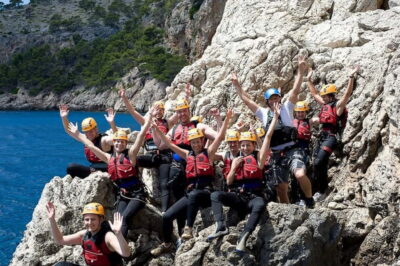
Kayak Tour with Caves, Snorkeling and Picnic (+ Cliff Jump)
Read our review →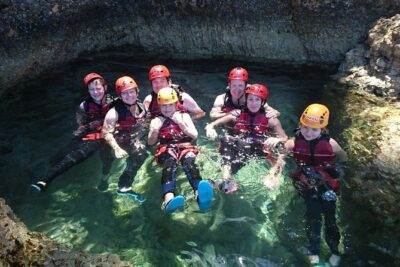
Small-Group Cliff Jumping Experience in Mallorca
Read our review →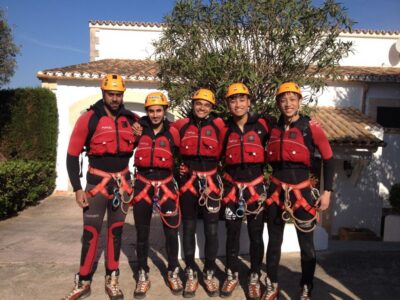
Browse the lists this tour appears in